
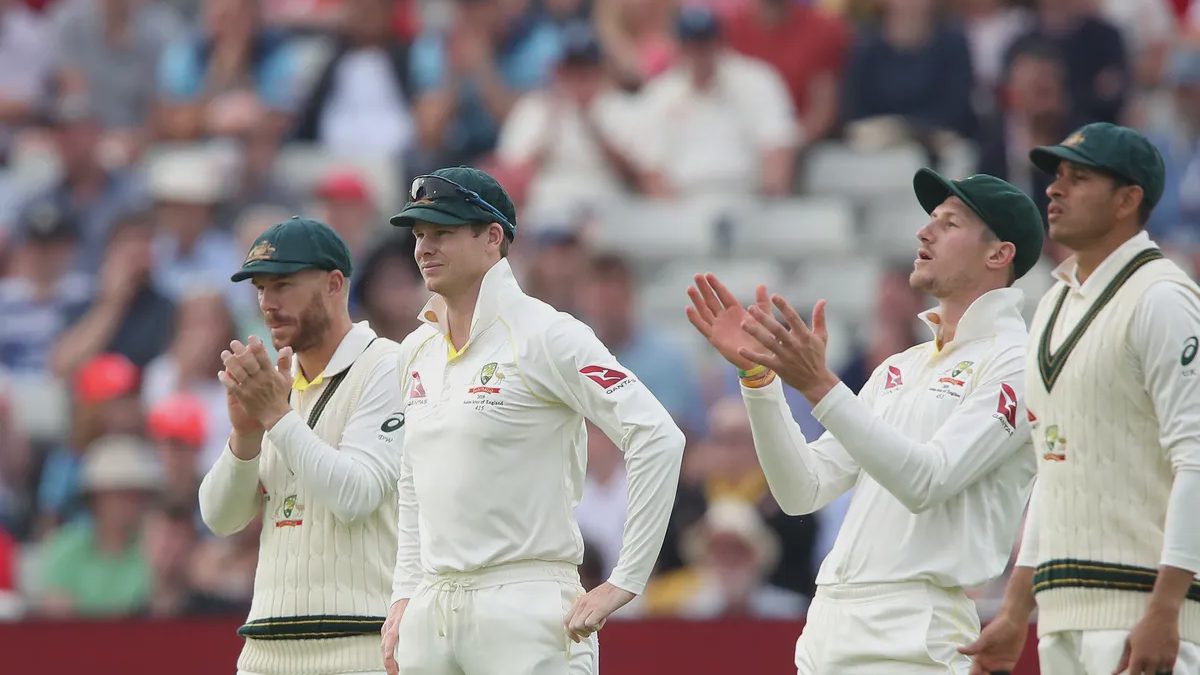
A petty cricketing crime, a clumsy cover-up, a hurried investigation and what are now widely considered to be heavy penalties for the main protagonists would not usually be the foundations for a timeless tale. Yet in the eight years since Cameron Bancroft was filmed with a piece of sandpaper in his hand on a cricket field in Cape Town, Australia’s ball tampering saga has become the story that refuses to die.
As the scandal that tore its way through Australian cricket in 2018 rears its ugly head again with new and resurfaced allegations and counterclaims, we look at the burning questions that threaten to turn a fight for the truth into a civil war.
1. Exactly who knew about Australia’s ball tampering?
Who knew what about Australia’s plans to tamper with the ball eight-and-a-half years ago has become central to the ongoing saga and the tit-for-tat now playing out in public. Despite the never-ending stream of claims and counterclaims, there is still no definitive version of events that shows who was and was not aware of the plot.
The battle lines were first drawn behind closed doors in South Africa in 2018 before Cricket Australia insisted prior knowledge of the plan in the third Test was limited to captain Steve Smith, vice-captain David Warner and inexperienced batter Bancroft. The three players accepted CA’s findings and penalties for conduct unbecoming and bringing the game into disrepute without taking up their option to appeal.
But speculation continues to swirl that knowledge of the ball-tampering plot was more widespread than just falling on Warner as the architect of the plan, Bancroft the one who carried out the instructions, and Smith the leader who failed to prevent their actions and later supported the attempts to conceal evidence and mislead match officials.
Bancroft stirred lingering scepticism over who was aware of the plot when he told the Guardian in 2021 it was “self-explanatory” whether at least some of the bowlers in Cape Town three years earlier knew about his actions on the field.
Warner, Bancroft and Smith were banned for their involvement in ball tampering. Photograph: Andrew Boyers/Action Images/Reuters
Usman Khawaja reignited the sandpapergate flames with the release of his memoir earlier this month, claimin, “It was all of us. Not the batters, not the bowlers, not the staff. All of us.” Warner was quick to back Khawaja’s explosive claims with his first public comments on the saga since 2018, as he said, “It’s 100% accurate what you’ve said. Now everyone knows the truth.”Former Australia bowler Chadd Sayers, a member of the 2018 touring party, was another to back Khawaja’s version of events.
But the biggest bomb came from Bancroft in a 4,500-word first-person account of the tour of South Africa and his role in the ball-tampering saga. The former Australia batter said: “It was not just the three of us – Steve Smith, David Warner and I – who knew about me using sandpaper on the ball in South Africa. It was the whole team.”
Australia’s senior bowling quartet from the 2018 Test in Cape Town and into the present day – current captain Pat Cummins, Mitchell Starc, Josh Hazlewood and Nathan Lyon – have maintained a strong stance since a collective statement in 2021 said they “did not know a foreign substance was taken onto the field to alter the condition of the ball”. Tim Paine, the wicketkeeper in 2018 who took the reins as Test captain from Smith, said in 2022 he was “stunned” to see Bancroft with sandpaper in his hand on the big screen at Newlands. The coaches from the tour – Darren Lehmann, David Saker and Graeme Hick – have also denied knowledge of sandpaper being used on the ball.
2. What does Steve Smith think – and why does his silence matter?
Smith has maintained a stony silence since the latest fallout began even as he returned from his home away from home in New York to join up with the New South Wales camp. The former Test captain is the only one of the sanctioned trio who is still playing for Australia – and perhaps the only figure whose standing has improved in recent weeks.
Smith accepted responsibility for ball-tampering in 2018. Photograph: Peter Parks/AFP/Getty Images
Smith has not spoken on the issue in any great detail since he returned from his playing suspension for the 2019 Ashes, and has since put the two-year leadership ban behind him to captain national teams when needed. The 37-year-old has little to gain from speaking out about what occurred in 2018 as he embarks on a farewell tour, however long that has to run. He is just as unlikely to benefit from falling on either side of who knew what, and whether to join the claims that the entire tour party was aware of the plan or to leave room for competing truths.
Having already conceded in 2018 that he turned a blind eye when he had the authority to stop the plot – a scenario supported by Bancroft’s detailed statement last week – if and when Smith chooses to speak his voice will carry as much weight as anyone’s. It could even determine which version of history prevails.
3. When was sandpaper first used as a ball tampering agent?
CA’s investigation in 2018 found the lengths Australia went to in Cape Town to use sandpaper to tamper with the ball were a desperate one-off. Smith had floated the same claim when he sat next to Bancroft during the press conference that followed the ball tampering revelations, and the captain at the time said: “I can promise you this is the first time it’s happened.”
Khawaja, Sayers and Bancroft have now all alleged sandpaper was also used to tamper with the ball in the second Test at Gqeberha, formerly known as Port Elizabeth, before the plot was exposed by TV cameras in Cape Town. Sayers backed Khawaja’s claim, saying sandpaper “was given to me to take off [the field]” in Gqeberha.
Bancroft was more explicit about his role in tampering with the ball during the second Test in his statement published last week. “I walked onto the field for the final session of day two carrying sandpaper. When I collected the ball, I used it,” he said.
Bancroft at Newlands in 2018. Photograph: Halden Krog/AP
Former South Africa captain AB de Villiers has gone a step further and alleged Australia tampered with the ball during their victory in the first Test in Durban. De Villiers was in the middle when Bancroft was spotted by TV cameras handling sandpaper during the third Test at Newlands, and said this week he has “no doubt” Australia’s premeditated cheating began even earlier.
CA’s current chief executive Todd Greenberg was asked in a press conference last Wednesday whether sandpaper had been used in any Tests before Cape Town. “I don’t know the answer to that question,” he said.
4. Will Cricket Australia re-open its initial investigation?
CA has said eight players in the third Test team were interviewed as part of the investigation in 2018, as well as other members of the touring party including 12th man Peter Handscomb.
Khawaja has expressed surprise that he was one of three players from the XI not to be called on to give evidence despite his position next to Bancroft in the changeroom for the duration of the Newlands Test. Shaun Marsh said in 2022 he was “a little bit [surprised] at the time” not to be interviewed, and Sayers has said this month that he also was not asked for his version of events.
Todd Greenberg and David Boon face the media. Photograph: James Ross/AAP/AP
The gaps in the investigation might be a cause for concern. But the greater worry is one of the key players has said he was not entirely honest in his dealings with CA’s investigators. Bancroft said in his first-person statement that he “did not give a complete and truthful account” and that he “withheld important details”.
Greenberg ruled out re-opening the investigation, saying there is no “compelling reason” to do so. CA has instead said it will create an independent “forum” for players and staff to share their accounts in the hope it provides a “circuit breaker” to the ongoing saga. Bancroft has said he will speak to the forum while CA has said the intention is not to “re-litigate” events eight years ago and it will not lead to further sanctions.
5. Will Pat Cummins survive as captain?
Cummins has been the most defiant of the players and coaches who have continued to deny knowledge of the ball-tampering plans. He became the public face of that side of the sandpapergate debate when he opened what would become a 68-minute press conference with a blistering takedown of Khawaja’s claims that he said were “100% wrong”.
But by denying his own knowledge in such definitive terms, the current Australia captain has left himself little room to move. His leadership role was called into question as Bancroft later backed Khawaja’s version of events and claimed the sanctioned trio were not alone in knowing about the plans to use sandpaper to tamper with the ball.
Cummins has been training with NSW this week. Photograph: Dean Lewins/AAP
Cummins’ fellow fast bowlers Starc and Hazlewood have reiterated that they had no prior knowledge of the plan to take sandpaper on to the field at Newlands. Hazlewood even threw his support behind the current Australia captain, saying he would consider his Test future if Cummins was forced out.
CA responded to the mounting pressure on Cummins last week with resounding support for him to continue his tenure as captain, with the board “unanimous” he would stay in the role for the home Test series against New Zealand starting next month.
6. Will sandpapergate ever end?
The soap opera has no obvious end, with versions of events moving further apart, memories fading and different motivations growing for joining or avoiding the conversation. Greenberg suggested as much when he set a low bar for CA’s independent forum and said, “looking for the perfect truth doesn’t exist, and we’re not chasing that”. Yet CA could bring the story closer to a conclusion by no longer treating transparency as optional.
Opening the door for all players and team staff from the 2018 tour of South Africa to voluntarily share their version of events has its merits. But many of those who want to speak have already had their say. Actively compelling the players and staff – and especially those who want to stay involved at the top level of the sport – to answer questions and put their accounts on the record to be shared publicly whether anonymous and otherwise, seems the best way for CA to show it has no more to hide.
Khawaja’s book that reignited the flames of sandpapergate. Photograph: Saeed Khan/AFP/Getty Images
CA can douse the flames on the scandal by conceding the flaws and omissions in its rush to pass judgment in 2018. An apology offered to Smith, Warner and Bancroft for bearing the full brunt of the disproportionate penalties would go some way to easing the lingering pain for the sanctioned players.
The reputational hit to the governing body for owning up to its own past missteps and mistakes – made under previous regimes – could hardly be any worse than the drip-feeding of recollections and opinions as players and staff from the ill-fated South Africa tour step away from the national teams.
With transparency and its own concessions, CA might finally draw a line under sandpapergate. It might even be enough to put Australian cricket’s longest-running saga to bed.