
When Pat Cummins was made captain of the Australian cricket team in 2021, he inherited a side still living with the consequences of Cape Town ball-tampering scandal. He has spent much of his captaincy trying to convince the world that it has changed.
He has won the World Test Championship and the ODI World Cup, retained the Ashes in England and presided over a team that has generally carried its authority without the abrasiveness that once seemed part of Australia’s sporting identity. He became the most recognisable face of a cricketing culture keen to demonstrate that it had learnt from its mistakes.
Now, eight years after Cape Town, that version of Australian cricket is being asked an uncomfortable question: how much of the truth was left behind in the reconstruction?
The latest intervention from Cameron Bancroft makes this more than another round of recollections about Sandpaper-gate. In his column for The West Australian, Bancroft has alleged that knowledge of the sandpaper operation extended beyond himself, Steve Smith and David Warner.
“I recall conversations with all the fast bowlers Pat Cummins, Mitchell Starc, Josh Hazlewood and Mitchell Marsh about whether it was reverse swinging enough,” Bancroft wrote.
“All the bowlers gave me feedback if my work on the ball was working. It was helpful.”
He also recalled being asked: “Is it going yet? It’s not going yet, it needs more.”
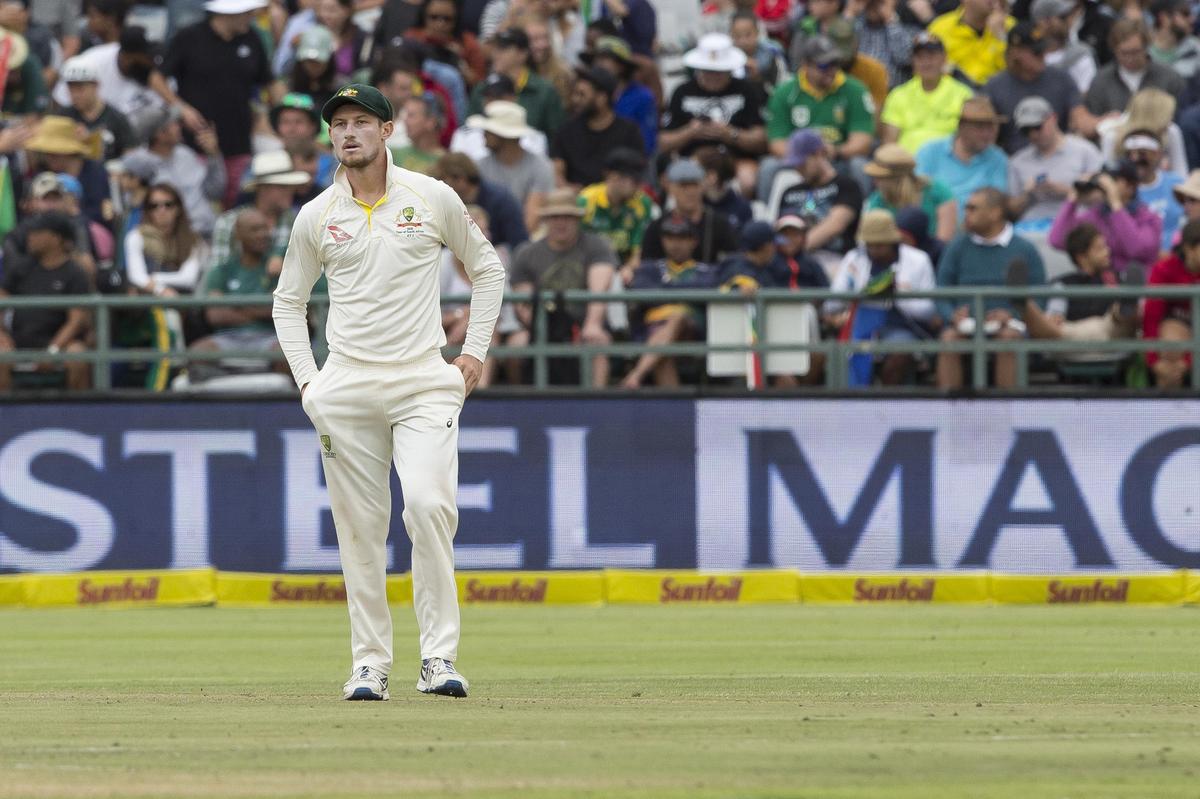
More damagingly, Bancroft says Cummins’ recent press conference, in which he rejected Usman Khawaja’s claims as “complete and utter nonsense,” was the final straw that persuaded him to speak. “It made me feel angry, betrayed and alone,” he wrote. “What I saw, experienced and lived with - not only him, but everyone else on that tour in South Africa - is not the public account he gave in his press conference and in the years previously when he has spoken on this time.”
Bancroft’s recollections sit in direct conflict with the denials issued by Cummins and Mitchell Starc. But the central issue remains: did the bowlers merely discuss the ball’s movement, or were they aware of the means by which that movement was being produced? Of course, the bowlers are entitled to their denials. But they are also obliged, given the seriousness of Bancroft’s account, to explain the conversations he describes.
Bancroft is not the first to challenge the 2018 version of events. Khawaja claimed in his autobiography Sabr that the whole team knew, and Warner has called that account “100 per cent accurate” and the original investigation “rushed and botched.” The significance is not that three people now tell precisely the same story. It is that the official account of 2018, in which responsibility was concentrated on three players, is being challenged by people who were in that dressing room.
Therefore, in retrospect, the investigation appears to have done little to establish the full extent of what happened. Its conclusions helped contain the damage but left important questions about the wider team’s knowledge and the culture that enabled the offence unanswered. The episode became a cautionary tale about excess, rather than an examination of how an entire sporting environment had allowed the pursuit of winning to override fairness and accountability.
This is where Cummins becomes central.
He was not Australia’s captain in 2018, and it would be unfair to hold him personally responsible for the team’s conduct or the investigation that followed. But he was part of that dressing room, and he later became the leader around whom Australian cricket fashioned much of its rehabilitation. That makes the questions about 2018 more pertinent, not less.
Cricket Australia’s chief executive Todd Greenberg has now acknowledged that the culture in 2018 was toxic and that responsibility extended beyond a group of players. That admission deserves attention. A win-at-all-costs mentality does not materialise overnight, nor does it flourish without institutional encouragement. The actions of three players may have brought the game into disrepute, but the conditions in which those actions became possible warrant a wider examination.
The danger for Cummins is that his reputation for leadership becomes entangled with an incomplete account of the past. His achievements as captain are beyond dispute, but they cannot become a shield against questions about the dressing room in which he once sat, or the account of Cape Town he has subsequently helped present.
Cricket Australia’s decision to establish an independent forum for players and staff to share their accounts is a start, but it is not a substitute for transparency. The organisation has said it is not reopening the investigation, that no sanctions will follow and that the findings may not be made public. That might provide a private space for recollection, but it risks producing another exercise in which the institution controls what the public is allowed to know. If the purpose is genuinely to settle the matter, the process must do more than collect competing versions behind closed doors.
For his part, Cummins has a choice. He can stand by his account, as he has, but he should also be prepared to address Bancroft’s specific recollections. Cummins’ agent, Neil Maxwell, has responded to the latest revelations by saying that “there is nothing he hasn’t answered”. But that assertion does not necessarily settle the questions Bancroft has raised. What conversations took place with Bancroft? What did Cummins understand those discussions to be about? At what point, if any, did he become aware that the ball was being deliberately altered? These are reasonable questions, not a presumption of guilt.
The irony is that Cummins’ greatest achievement as captain has been to make Australian cricket look as though it had moved beyond 2018. Yet a reputation rebuilt on the promise of change must be able to withstand scrutiny of the past.
Therefore, the next test of Cummins’ leadership may have little to do with a ball, a bat or a trophy. It may be whether he can help his country tell a more complete story about the episode from which it claims to have learnt.
Published on Nov 19, 2026