
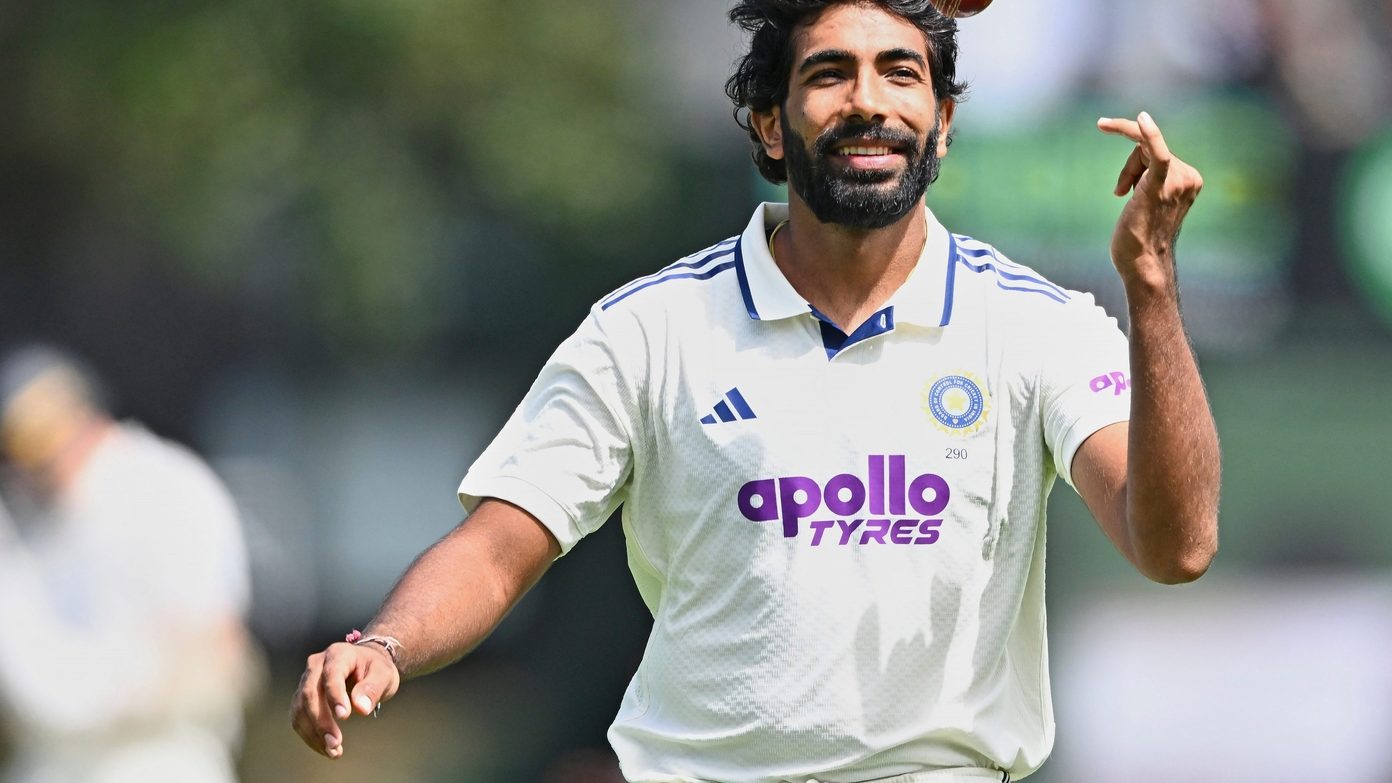
Morne Morkel, India’s bowling coach, has urged his pacers to show more courage with the Kookaburra ball as Shubman Gill and Co. prepare to take on New Zealand in the second Test in Christchurch, starting Friday. The first Test ended in a draw despite India securing a substantial first-innings lead of 352 runs.
Can Jasprit Bumrah stand out for India again? (AP)
On Day 5, India reduced the Kiwis to 176/5, raising hopes of a rare victory. However, a strong rearguard effort from Glenn Phillips and Daryl Mitchell - the duo batted for 259 balls, putting together an unbeaten 63-run partnership - denied India. The lack of assistance from the pitch, meanwhile, became a talking point, with India captain Gill opting to shake hands with 15 overs remaining.
The conditions at Hagley Oval, however, promise to be different. With a green layer expected on the surface, Morkel wants his pace attack - whether changed or unchanged from the Wellington Test – to be a lot ‘braver’.
“The data and the facts, black and white facts, is that [Wellington] wicket lost a lot of pace quite quickly early in the Test match. And from there on, we quickly needed to readjust our plans. But still, for me, we created a couple of opportunities. If Akash [Deep], for instance, got that run out or the short leg, you open up certain things. So when the conditions get tough and it gets slower, it’s for us as a team to be ready for that 50-50 chance,” Morkel said on the eve of the 2nd Test.
“It does make life a lot harder, especially when the surface also loses a little bit of pace with the softer ball. That is my experience, playing for 16 years with the Kookaburra ball, that you need to make that new ball count. You need to get the ball in the right area, sometimes be a bit braver in terms of your lengths and your lines, even going for a few runs, because when the ball gets soft, you can always put a ring field in and bring the run rate back. That is stuff for our bowling unit and for the team to understand, and we need to get better at that. We play with the SG ball in India, where we bring spin into the game. But playing with the Kookaburra ball in these conditions, there is a different pattern that you need to be comfortable with, and you need to sometimes be brave.”
After the draw, Gill urged the ICC to reconsider the saliva ban. The use of saliva on the cricket ball was prohibited as a precautionary measure in 2020 amid the Covid-19 pandemic, with the restriction made permanent in 2022. Gill’s comments reignited the debate, but his New Zealand counterpart Tom Latham has a different view.
“I think sometimes the wicket can dictate what the ball does, whether it’s a little bit flatter or a little bit more abrasive, then the ball can deteriorate a little bit quicker, whether that be a Dukes ball, whether that be a Kookaburra ball,” said the New Zealand captain.
“So I think from our point of view, we’re always trying to adapt and find what’s the best way to look after the ball to keep it in good condition as much as we can.”