
Bowlers win you trophies, they say. But is that a compliment or a burden? Historically, bowlers have rarely been the poster boys of Indian cricket. Kapil Dev notwithstanding, that space belonged for generations to the Sunil Gavaskars, Sachin Tendulkars and Virat Kohlis. Pakistan had its Wasims, Waqars and Shoaibs. India was still searching for a fast-bowling superstar who could make batters lose sleep.
Then came Jasprit Bumrah. The world sat up and took notice. Kids began replicating his unorthodox action, batters began losing sleep over his spells, and over the years he became the fast-bowling hero Indian cricket had been waiting for.
But, at the end of the day, he is a bowler.
And apparently, that means he is not allowed a couple of quiet outings without a national debate on whether his best days are behind him.
THE CRIME SCENE
On Friday at Hagley Oval, on the opening day of the second Test between India and New Zealand in Christchurch, Bumrah did something that caught the attention of everyone who had not slept through their alarm.
He moved away from his trademark run-up.
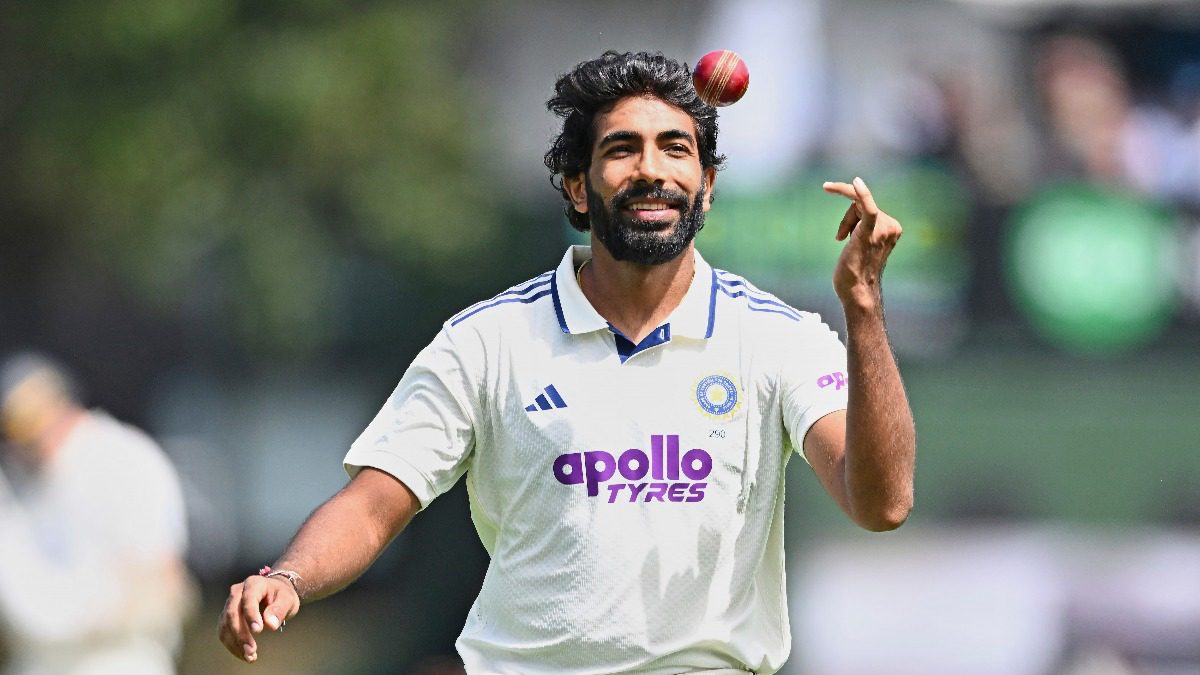
The familiar approach briefly made way for something more conventional. Bumrah ran in with his hands apart, carrying the ball by his side instead of holding it close to his body with both hands. His distinctive delivery stride and release remained largely unchanged.
Was it a brand-new experiment? Not quite. Several observers pointed out that it resembled the approach he used in his early days in the IPL. After starting with his usual routine, he turned to the modified run-up in his spell after lunch, and he switched between the two, sometimes within the same over.
Interesting. Think Bumrah is trying to figure out what best would work for him in the coming days. Certainly not able to bowl 140 kph regularly. Hope he finds what he is looking for. #NZv — Akshay Ramesh (@iamnotakshayr) November 27, 2026
The timing added to the intrigue. Bumrah had not been able to make an early breakthrough with the new ball. New Zealand’s openers got off to a steady start before debutant Gurnoor Brar removed Devon Conway at the stroke of lunch. Bumrah returned after the break, and the altered approach soon became the talking point.Day 1: HIGHLIGHTS|SCORECARD
By the end of the day, he had bowled 19 overs, conceded just 37 runs and picked up no wickets. Four maidens. An economy rate of less than two.
In most professions, this is called a Friday. In Indian cricket, it is apparently enough to get the entire cricketing world worried.
Was Bumrah fully fit? Was he trying to reduce the impact on his body during the delivery stride and landing? Was this workload management, given his history of injuries? There had also been reports earlier this year of him using a longer-than-usual run-up, particularly in a series against Afghanistan in Delhi.
The questions were understandable. The discourse, however, was something else.
WHAT WAS BUMRAH UP TO?
Former New Zealand spinner Ish Sodhi was among those intrigued, particularly by the way Bumrah switched between his approaches.
“It was interesting to see. I will be interested to see what he thinks of it. He is so talented. Even with the slight change of action I think it must have been a rhythm thing. Even with that action, it did not change his accuracy a hell of a lot. He was still pretty accurate,” Sodhi told Sony Sports Network.
“The thing that I found fascinating is that he had different run-ups in the same over. It was not over-by-over, it was delivery by delivery,” he added.
Sunil Gavaskar, meanwhile, offered a simpler explanation. Perhaps Bumrah was just trying to confuse the batters.
“He had a smile on his face. Sometimes, bowlers try to do something different to throw the batter off. So that’s all he is looking to do,” Gavaskar said.
Was it an attempt to take some load off the delivery stride? Gavaskar did not think so.
“No, I think he was just trying to confuse the batter. Bowlers do this. Spinners do this all the time. We have seen Ashwin doing it,” he said.
Fair enough. Not every change in a fast bowler’s routine needs a medical examination and a succession plan.
THE NUMBERS BEHIND THE PANIC
To be fair to the worriers, there are reasons Bumrah’s bowling has come under closer scrutiny on this tour.
Only six per cent of his deliveries clocked more than 140 kph in the first Test in Wellington. On the opening day in Christchurch, commentators noted, the proportion was virtually negligible. Is he finding it hard to sustain his usual intensity and pace over a Test or a series? That is a fair question.
It is also no secret that India have been managing his workload carefully.
Bumrah did not feature in the ODI or T20I series in New Zealand. Since the end of IPL 2026, India have played 45 matches across formats, and he has featured in only nine of them. The ongoing Test is his 10th appearance in that period.
A knee injury in England in July kept him out for close to two months. He returned for the home T20I series against Afghanistan, played the Asian Games in Japan in October, and warmed up for the New Zealand Tests with an unofficial Test for India A in Lincoln in November.
Bumrah has played only 9 out of India’s 45 matches since the end of IPL 2026
There is a workload to manage, a body to protect and a career Indian cricket would dearly love to prolong. But does every slightly different run-up have to be treated as an early warning siren?
Consider Wellington. Bumrah bowled 49 overs across two innings, 29 in the first and 20 in the second, and took four wickets in the first innings and one in the second. India settled for a draw after bowling 120 overs and picking up just five wickets in New Zealand’s second innings. They had four sessions to bowl the hosts out, and the attack, led by Bumrah, could not get it done.
On the final day, his pace was well below his usual 130 kph-plus range, and people asked why India’s premier fast bowler could not conjure something special when the team needed it most.
There was, however, another side to that story. Bumrah bowled only 12 of the 75 overs India delivered that day, and none of the other pacers was consistently generating express pace either. Captain Shubman Gill later pointed to the lack of assistance from the pitch, despite it being the fifth day, and to the ball going soft too early. Perhaps, then, the problem was not simply Bumrah.
His year-on-year numbers add some perspective. His workload, measured in overs bowled per Test match, has fluctuated over the years, but there is no dramatic departure from the range he has operated in. His Test bowling average tells an interesting story, too.
The 2026 figure is certainly less flattering, though the sample is small, just two Tests so far. If this is the beginning of the end, it has arrived with a very familiar workload.
Yes, he has been managing that workload. Yes, he has been wary of recurring injuries. When he decided to play only three of the five Tests in England last year, people wanted his head. But should one of the greatest match-winners of his generation not be given the time and space to work things out?
Would superstar batters in a lean patch face the same scrutiny? Would every minor tweak to their technique trigger questions about their longevity?
When was the last time Bumrah went through a sustained slump? We genuinely don’t know, because we have rarely seen a quiet Bumrah. He has taken wickets at will for so long that two modest Tests have felt like a crisis. They have moved his career Test average from 19.79 to 20.09. That is still the best of any bowler with 200 wickets bar one active contender, which is to say, generational.
BUMRAH NEEDS A BOWLING ATTACK, TOO
There is another aspect of this discussion that deserves attention: the lack of support around him.
He enjoyed considerable success alongside Mohammed Shami, Ishant Sharma and Mohammed Siraj, partnerships that let India pile sustained pressure on opposition batters. With Shami retired and Siraj on the sidelines, Bumrah is now finding his rhythm with the likes of Anshul Kamboj, Prasidh Krishna and Akash Deep.
That is not to question their ability. But a formidable Test attack takes time to build, and Bumrah cannot be expected to do everything himself.
Gavaskar made a similar observation on the opening day in Christchurch.
“What happens with Bumrah now is that if he gets those early wickets, he’s a different bowler. But when he doesn’t, even with the second new ball, you tend to see that by the third over of his spell, he doesn’t have the same zip that he had a couple of years ago. And that is understandable. Fast bowling is very, very tough.”
On whether India were asking too much of their premier fast bowler, Gavaskar pointed to the need for more support from the rest of the attack.
“I think it was clear that he made the batters play. There was an extra bit of tension when he was bowling, but he didn’t bowl more than five overs in a spell. So you’re really getting that short, sharp burst.
“I think the other bowlers bowled better in the second innings. It’s about how quickly they can learn and adapt to provide that extra bit of support. At the moment, he’s the one who looks like a threat with the ball, while the batters tend to relax a little more against the others.”
Gavaskar also felt the rest of the attack needed to do more to ease the burden on Bumrah.
“You want to see more from the other bowlers. They need to challenge the batters a little more so that Bumrah can perhaps bowl longer spells. You want six or seven overs out of him early, especially here at Hagley Oval, after winning the toss and getting a surface that should really suit him.”
That is the bigger concern for India: a bowling attack that shares the responsibility, rather than one that waits for Bumrah to produce something extraordinary every time he gets the ball.
Bumrah changed his run-up for an afternoon and conceded under two an over doing it. If that is the beginning of the end, it is the most economical one cricket has ever seen.
Let the man run in however he likes. The only people who should be panicking are the ones holding the bats.