Virat Kohli at 38: From a straight drive that damaged Reeboks to a 228 after a tattoo challenge — let me take you on a journey that made Chiku... King Kohli


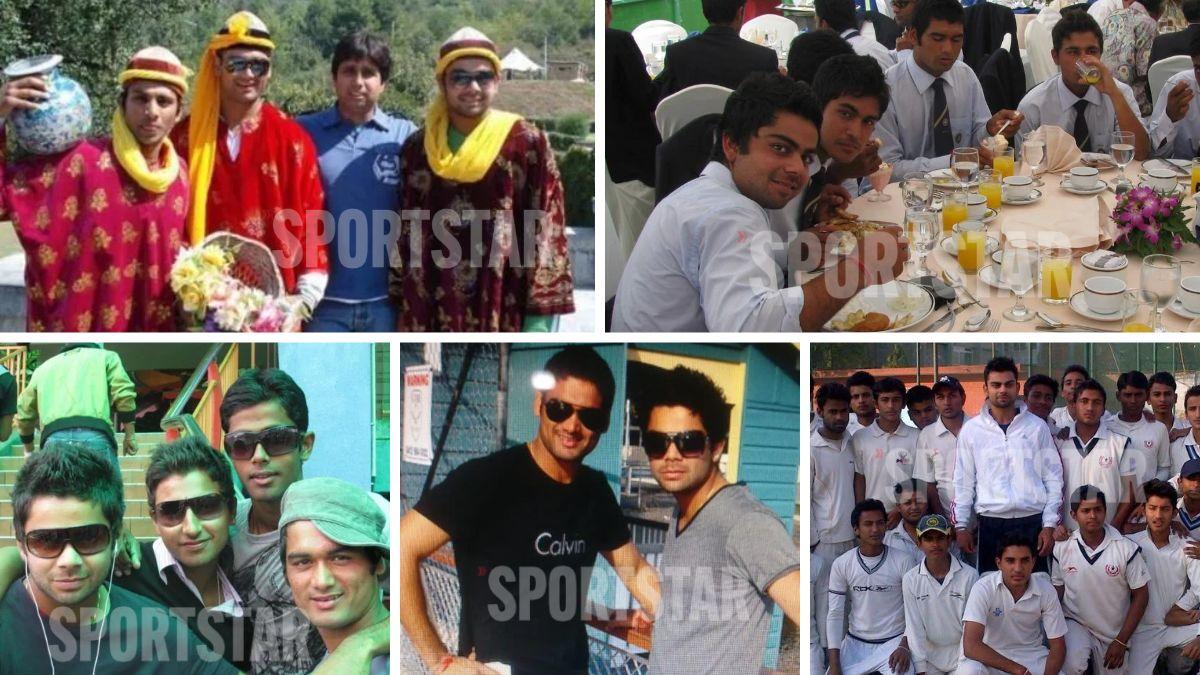
Let me take you back to the days when Virat Kohli was just a young boy making his way through Delhi’s cricketing circles. On his 38th birthday, I revisit the memories, friendships and moments that shaped the cricketer we know today.
I have known Virat Kohli since he was a young boy making his way through Delhi’s cricketing circles. Long before the world discovered the batsman who could take a chase apart, there was a youngster from West Delhi with an insatiable appetite for batting: competitive, fearless and certain of what he wanted from the game.
I have watched that boy grow into one of the finest cricketers of his generation. Some moments from that journey are grand, others wonderfully ordinary, but each tells me something about the man behind the helmet.
A damaged shoe and a promise
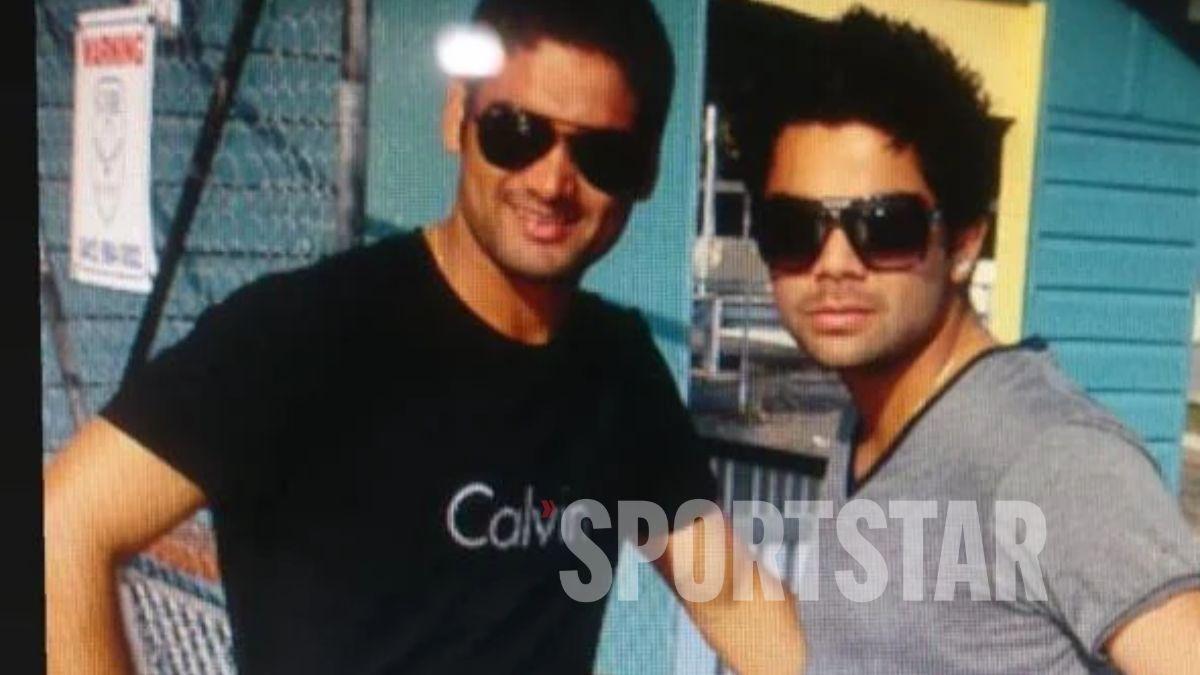
A friendship forged in Delhi’s junior cricket and strengthened by years of shared memories. Virat Kohli and Pradeep Sangwan, who came through the ranks together and celebrated India’s 2008 U-19 World Cup triumph. | Photo Credit: Pradeep Sangwan
Pradeep Sangwan, one of Virat’s teammates from his junior days, has a delightful story about a pair of Reebok shoes. The two first played together in an Under-15 match at the Jamia Millia ground in 2003 and later celebrated several birthdays together. Both were born on November 5.
At a National Stadium camp in 2002, Sangwan turned up in a new pair of Reeboks bought at a factory sale in Kapashera in south Delhi. During one session, Virat played a straight drive so firmly that Sangwan had no time to move out of its path. The ball struck the new shoe and damaged it. Sangwan laughed and told Virat he would have to buy him another pair. Virat obliged.
It was a small incident, but it said something about the camaraderie among those youngsters. Years later, after India won the 2008 U-19 World Cup, the two used their prize money to buy their first cars: Sangwan a Scorpio and Virat a Honda Civic. From a damaged pair of shoes to their first cars, it was a friendship that had travelled a long way.
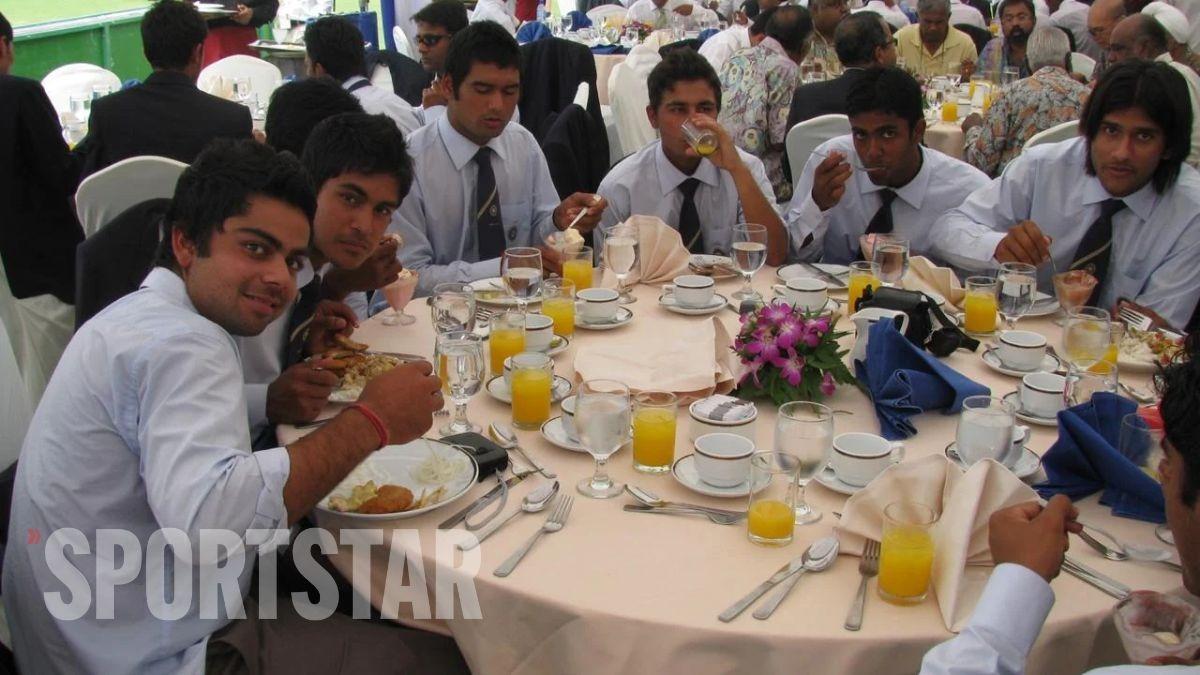
Both born on November 5, both part of India’s 2008 U-19 World Cup-winning team. Virat Kohli and Pradeep Sangwan’s (3rd from left) friendship began long before the world knew their names. | Photo Credit: Pradeep Sangwan
The Jamia Millia match also gave me a lovely memory from RD Singh, one of the scorers. “I remember Virat scored a fifty (54) and settled next to me after he got out. He was clapping non-stop for the batsmen at the crease. I told him to stop clapping and look to invite applause by doing well himself. The world should clap for you. He just nodded and stayed silent. He never looked back from there and scored heavily in the local circuit,” RD recalled.
His fellow scorer KK Tiwari played a part too, distributing scores to the press in the evenings whenever Virat excelled. “ Iski headline laga do, Sir (put him in the headline),” Tiwari would plead.
How Chiku came to be
I must confess that I never called him Chiku. I always addressed him as Virat. The nickname belonged to his close friends and coaches, and its origin is an amusing little story. It was told to me by Ajit Chaudhary, a dear friend with whom I played cricket while growing up, and who later became closely associated with Virat’s early years.
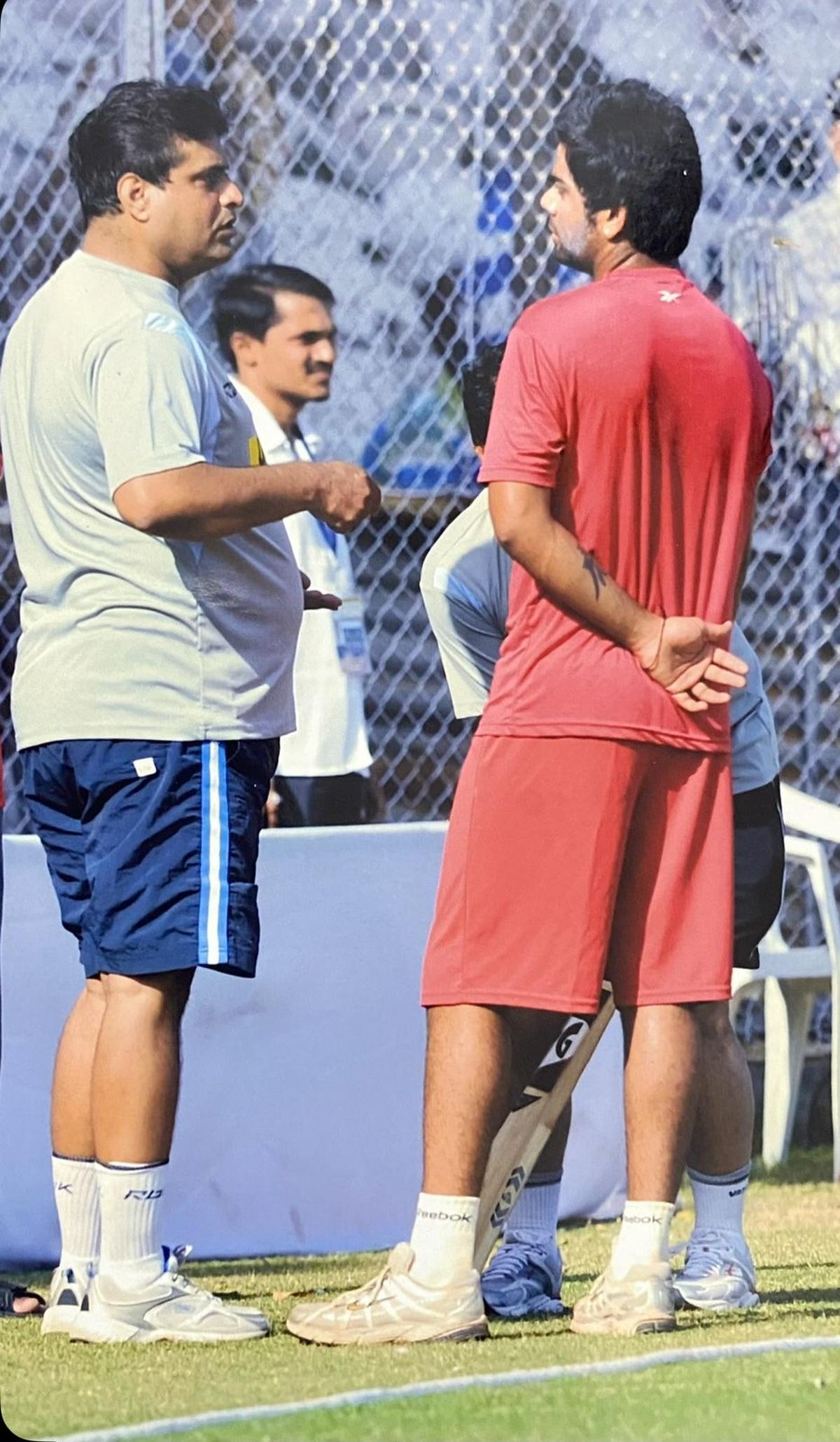
Some bonds go back to the very beginning. Ajit Chaudhary, the coach who gave Virat Kohli the nickname ‘Chiku’, is seen with him here during an Irani Cup match in Vadodara in 2008. | Photo Credit: Ajit Chaudhary
During a match against Mumbai in November 2007, Virat, who had long hair at the time, asked his coach, “ Coach saab, main zara baal kata ke aa jaoon?” He returned after a haircut and asked innocently, “How do I look, sir?” Ajit looked at him and remarked, “ Chiku lag raha hai.”
As a boy, Ajit had read a Champak comic featuring a rabbit called Chiku, with big ears and short hair, and the resemblance struck him. Gautam Gambhir, Virender Sehwag, Rajat Bhatia and a few others were around, and the name caught on. It became famous when the stump microphone once caught M.S. Dhoni calling him “ Chiku”. Ishant Sharma and Ashish Nehra still use it. Virat, in turn, calls Ishant “ Lambu”. Some friendships are best preserved through such nicknames.
The boy from Meera Bagh
My earliest memory of Virat goes back to May 30, 1998, a date his coach Rajkumar Sharma remembers well. Rajkumar, whom we affectionately call Raju, had set up the West Delhi Cricket Academy at St. Sophia School in Paschim Vihar, close to Virat’s home in Meera Bagh. When Virat’s father brought him on his scooter, Rajkumar thought the boy was too young to enrol. But Virat’s father insisted, and the coach relented.
One session changed Rajkumar’s mind. During throwdown drills, Virat, from almost the boundary, sent a throw flat and straight into the wicketkeeper’s gloves. Rajkumar was struck by its speed and accuracy. Soon Virat was a regular, cycling to the academy with his kit bag perched on the front. Years later, when I spoke to Rajkumar for a story, he recalled that image, and it remains a lovely picture of the boy who would become a global phenomenon.
He was fearless, too, insisting on playing against older, stronger opponents and on opening the batting. He did not want to miss out on opportunities. He wanted to make runs. “At 15, he scored 160 in a 40-over match at Guru Gobind Singh College. It was a proper contest, with a decent attack and a sizeable ground,” Rajkumar recalled. Virat never tires of acknowledging Rajkumar’s place in his life, calling him a “father figure”.
A tattoo and a double hundred
Meanwhile, Ajit has another delightful story from those days. He was coaching Delhi in the U-17 Vijay Merchant Trophy in Kolkata in January 2006. When Virat turned up on the eve of the semifinal against Baroda with a tattoo, Ajit was not amused. He challenged the youngster to justify it with a substantial innings. Virat promised he would, and slammed a terrific 228. Afterwards he went up to Ajit, flaunted the tattoo and asked, “ Coach saab, ab theek hai naa?” He had also scored 120 against Uttar Pradesh in the preceding match and 60 in the final against Mumbai, as Delhi won the trophy.
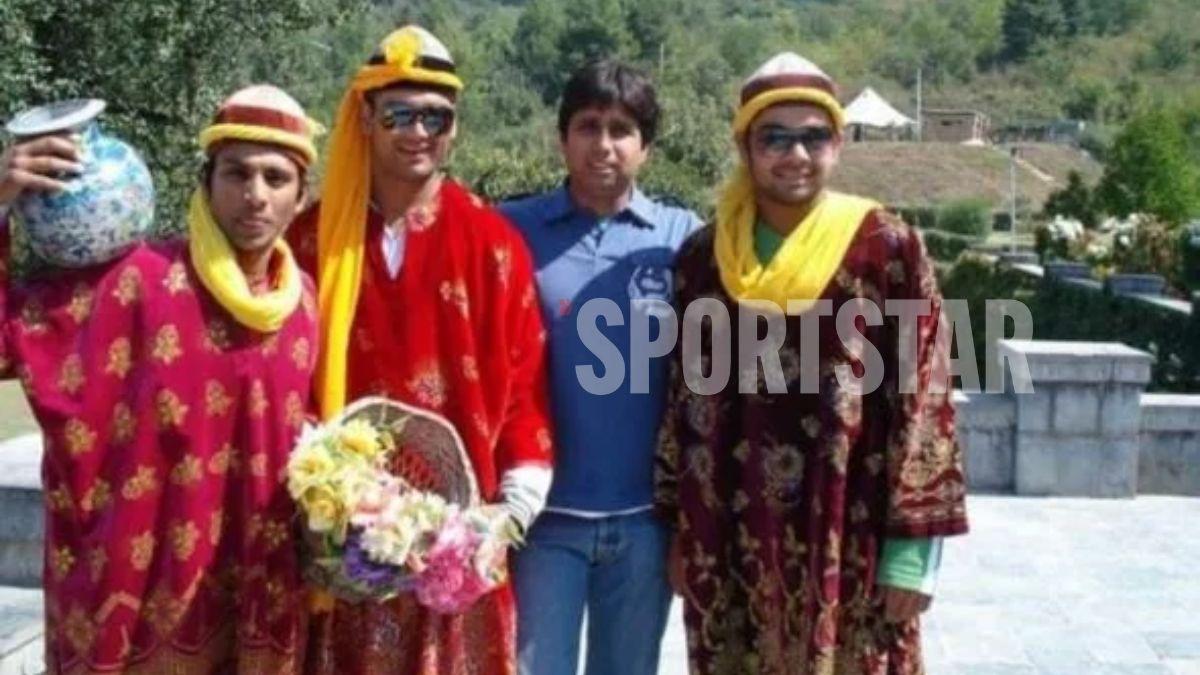
Under-19 cricket team in Jammu and Kashmir, October 2017: (From left) Rahul Yadav (wicketkeeper), Pradeep Sangwan, trainer Sujeet Singh and Virat Kohli. | Photo Credit: Pradeep Sangwan
Sangwan remembers how well Virat played the Sonex ball, which swung considerably in the northern winter. He disagrees with the suggestion that Virat, in his formative years, regularly played across the line, recalling a 191 against Rajasthan in the 2006 Cooch Behar Trophy. “Virat scored that big hundred without once playing across the line,” said Sangwan. As Sehwag later recalled, “It was Pradeep Sangwan who came and told me, ‘Bhaiya, ek ladkaa hain jo aapko bhi peeche chhor dega (Brother, there is a boy who will even surpass you)’. I was curious to know who this boy was.”
Karan Rai, Virat’s junior captain, remembers his 251 against Himachal Pradesh in Una, 179 against Jammu and Kashmir in Delhi in 2004 and 227 against Punjab in Patiala in 2005. The group had little doubt about the youngster’s potential. “Yeh aag laga dega (He will set cricket on fire)”, they would say. He eventually did.
Former India batsman Gursharan Singh, then Delhi’s head coach, was particularly impressed by the Una innings. “I had seen him practise against the bouncer and also his skills at leaving the ball. In Una, HP had posted 366, and there was a chance of Delhi conceding the lead at 155 for four. But Virat showed early signs of mastering a chase. His mindset was exceptional. I warned him not to play the hook, and he did not attempt one until he had crossed 200,” Gursharan said.
The selectors who nearly missed him
Virat’s rise was not without disappointments. He was initially turned away at Delhi’s selection trials, judged to lack the talent and not to fit the selectors’ scheme of things. He went away, scored heavily and returned.
One man who recognised his potential early was Dilip Vengsarkar, a debt Virat himself acknowledges. Dilip watched junior cricket as part of the Talent Resource Development Officer scheme started by then BCCI president Jagmohan Dalmiya, and had heard about Virat. When the National Cricket Academy team played the Emerging Players’ Tournament in Australia in July 2008, Virat agreed without hesitation to open, and scored an unbeaten 120 against New Zealand at Brisbane’s Harris Oval. “He did not throw his wicket away after reaching three figures,” Dilip pointed out. Impressed by his mental maturity, he backed Virat for the Sri Lanka tour a month later. Looking back, it is difficult to argue with that judgement.
From chole bhature to sprouts
I have also seen a change in Virat away from the field. In his early days he was probably the biggest food lover in the Delhi dressing room. Chole bhature were a particular weakness, and he could suddenly stop the car if he spotted a place serving them. Samosas were another favourite.
Around 2012‑13, I was told, he became far more serious about his fitness. He gave up the chole bhature and samosas, followed a disciplined diet, and often skipped lunch for sprouts and boiled eggs, sticking to the routine all season. I remember seeing him eat sprouts at his house when I went there for an interview. His mother was around, and he made sure I was looked after even as he stuck to his own meal. It was a conscious shift that would have a lasting influence on his career.
A wonderful host and a generous gesture
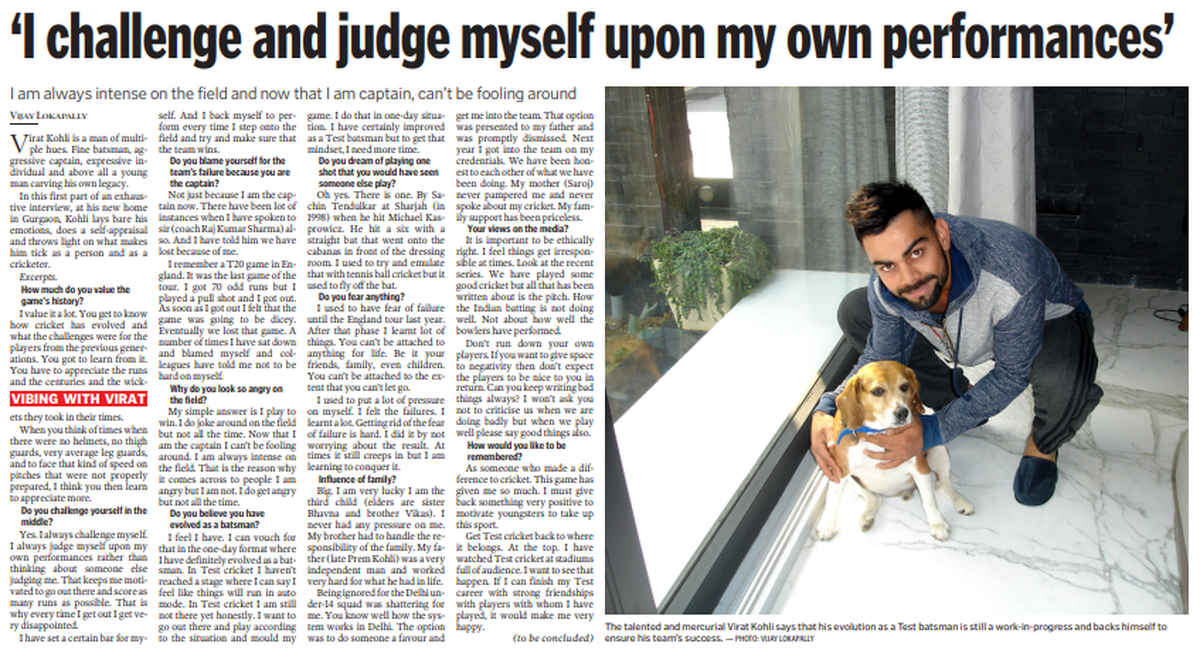
At the time, Virat was not known for giving interviews and tended to avoid the media. One day he called and said, “Sir, let’s do the interview.” He invited me to his new house in Gurgaon, which was far from where I stayed, and offered, “ Main aa jaun aapke ghar pe?” I pointed out that his arrival would cause a stampede, so I went to him.
He was a wonderful host. “ Main sprouts khaunga, aapko paranthe khilaunga,” he said. Believe me, other than the paranthas I have eaten at Gambhir’s house, I have rarely had anything quite like the ones served at Virat’s home. His mother was there too. We had a long conversation, and the substantial interview we carried in Sportstar and the newspaper was a big hit because he had not spoken at such length before. Rajkumar accompanied me and occasionally reminded Virat of incidents from his past.
What often struck me was Virat’s interest in reading. He spoke of his admiration for Autobiography of a Yogi and the teachings of Swami Vivekananda. He had a spiritual side that perhaps not everyone associated with the fiercely competitive cricketer on the field. He is God-fearing and visits temples during tours.
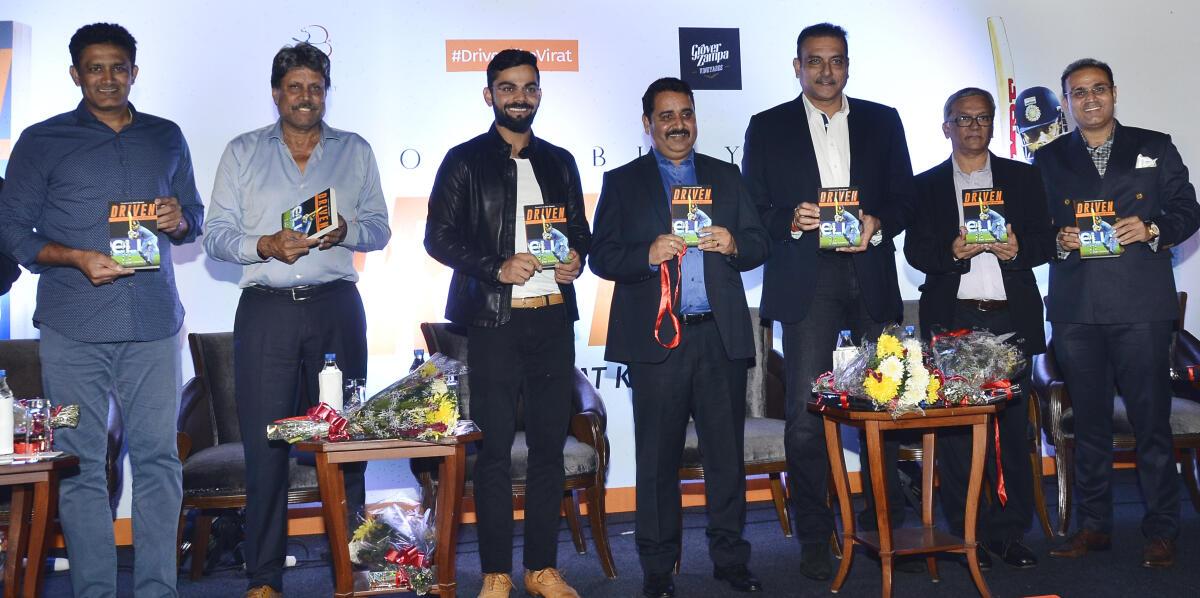
A special moment in my journey with Virat Kohli. He readily agreed to launch my book on his life, Driven -- The Virat Kohli Story, at the Maurya Hotel in Delhi on October 18, 2016. He arrived early and made the occasion memorable. | Photo Credit: Shiv Kumar Pushpakar
One of my most memorable interactions with Virat came when Bloomsbury India asked me to write a book on him. After completing it, I asked him during the Kanpur Test in September 2016 whether he would launch it. He readily agreed, and we held the launch on October 18, 2016, at the Maurya Hotel in Delhi, where the team was staying for the ODI against New Zealand. It was the early days of his Twitter presence, and he posted: “Humbled to have a book written about me by @bradsobers. Thank you for this book, sir #DrivenLikeVirat.” (My handle was named after Don Bradman and Garry Sobers.)
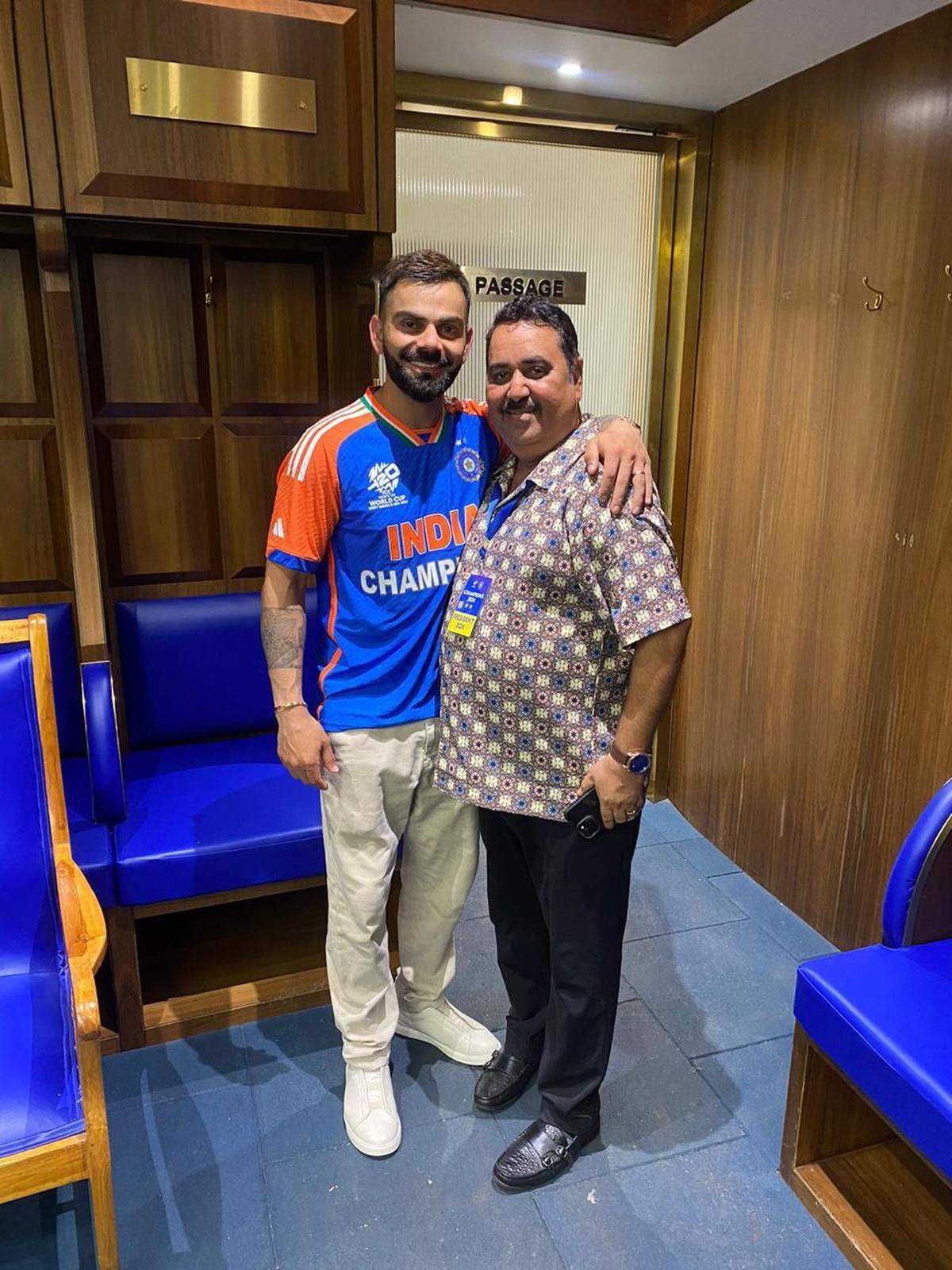
The man who first saw the spark in Virat Kohli. Rajkumar Sharma, his childhood coach and the father figure who helped shape his journey, with his most celebrated pupil. | Photo Credit: Rajkumar Sharma
Virat arrived nearly an hour early, in a black jacket, and rather than make an appearance and leave, he moved around and spoke to the guests. Kapil Dev, Sehwag, Anil Kumble, Ravi Shastri and Rajkumar were present. He spoke warmly about the privilege of sharing the stage with so many greats. The book was not an authorised biography but an account of his journey, which I have since updated twice. He could easily have stayed away. Instead, he came early and made the occasion special.
Remembering Sachin
Virat’s admiration for Sachin Tendulkar is well known. I remember the emotional moment after India’s World Cup triumph when he lifted Sachin on his shoulders, saying Sachin had carried Indian cricket on his shoulders for years and now it was their turn to carry him.
Virat has also inherited something of Sachin’s generosity. He gives cricket equipment to those who need it, supports sportspersons beyond cricket, contributes to causes without seeking publicity, and backs young athletes through scholarships. Perhaps he understands the importance of a helping hand because he remembers the people who helped him.
The innings I will never forget
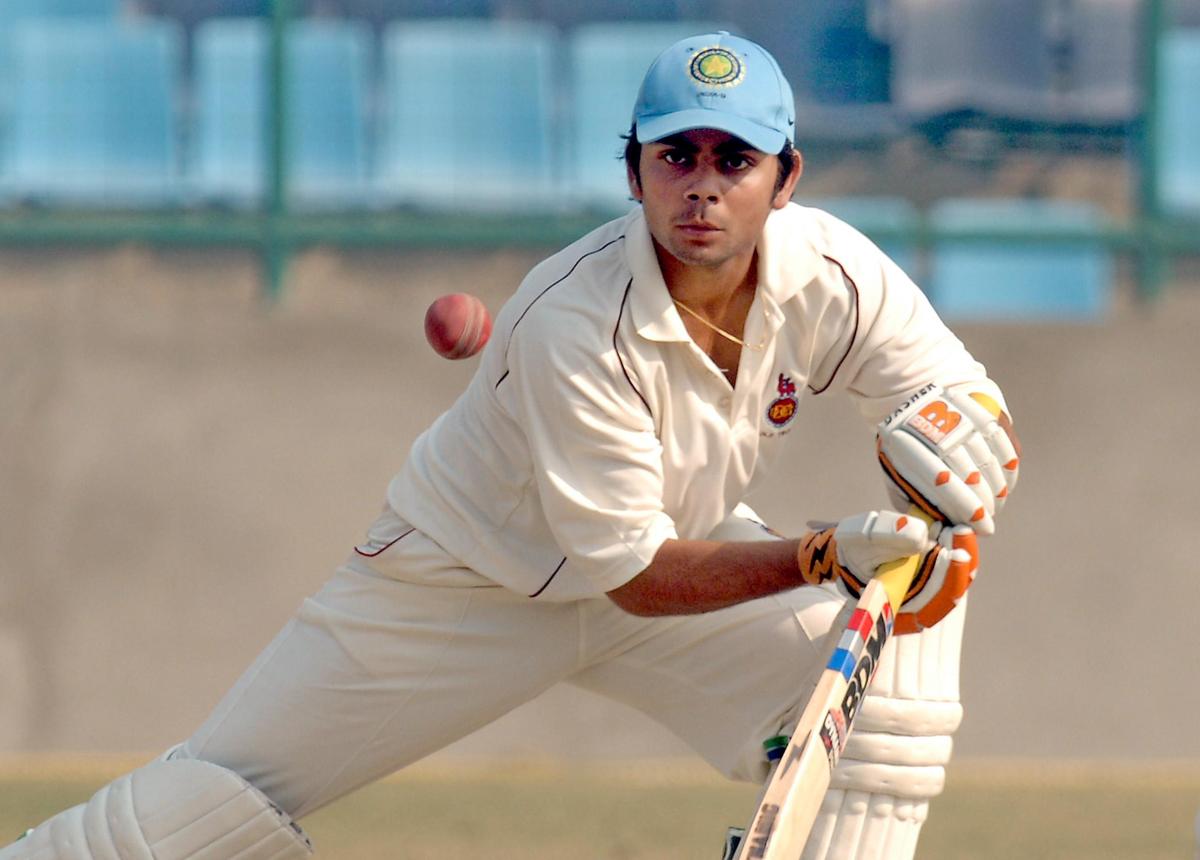
There are moments in a cricketer’s journey that reveal the person behind the player. Virat Kohli’s 90 against Karnataka, played hours after his father’s death, was one such moment. | Photo Credit: The Hindu Archives
Of all my memories of Virat’s early career, none is more indelible than December 19, 2006, at the Feroz Shah Kotla. Delhi was playing Karnataka in a Ranji Trophy match. I have always been an early visitor to the ground, and that morning I arrived at around 8 or 8.15. Delhi was facing the follow-on, and Virat, still a teenager, was an overnight batsman. His partner, Puneet Bisht, had not yet arrived.
Chetan Chauhan spotted me walking around the boundary and came over. “Vijay, look at this boy. His father has died. I don’t know how to handle this situation.” I was stunned. Captain Mithun Manhas was equally concerned. We went in and found Virat in the dressing room, the grief evident on his face. Chauhan asked what he intended to do. “I will go and bat. I will bat and then go home,” Virat replied.
There was something deeply moving about that response. Karnataka had made 446, and Delhi had ended the second day at 103 for five against a formidable side that included Robin Uthappa, Stuart Binny and Sunil Joshi, with Venkatesh Prasad as coach. Virat went out and batted with Bisht, and the circumstances made the innings far more significant than the runs. He was eventually adjudged caught behind at 90, though he had not nicked the ball. He controlled his emotions and left for home to attend the funeral.
There is another part to this story. Rajkumar was in Australia with a team. Virat informed his coach, and his elder brother Vikas Kohli was involved in the conversations. Rajkumar urged him to return and complete his innings. It was an extraordinary thing to ask of an 18-year-old, but Rajkumar knew the boy and understood his temperament. Virat returned and helped Delhi avoid the follow-on.
I have never forgotten that day. The entire Karnataka team came across to offer its condolences, a generous gesture I remember with affection. Bisht later told me, “Sir, he returned home and called me at night to check if I had got my century. I didn’t know how to react.”
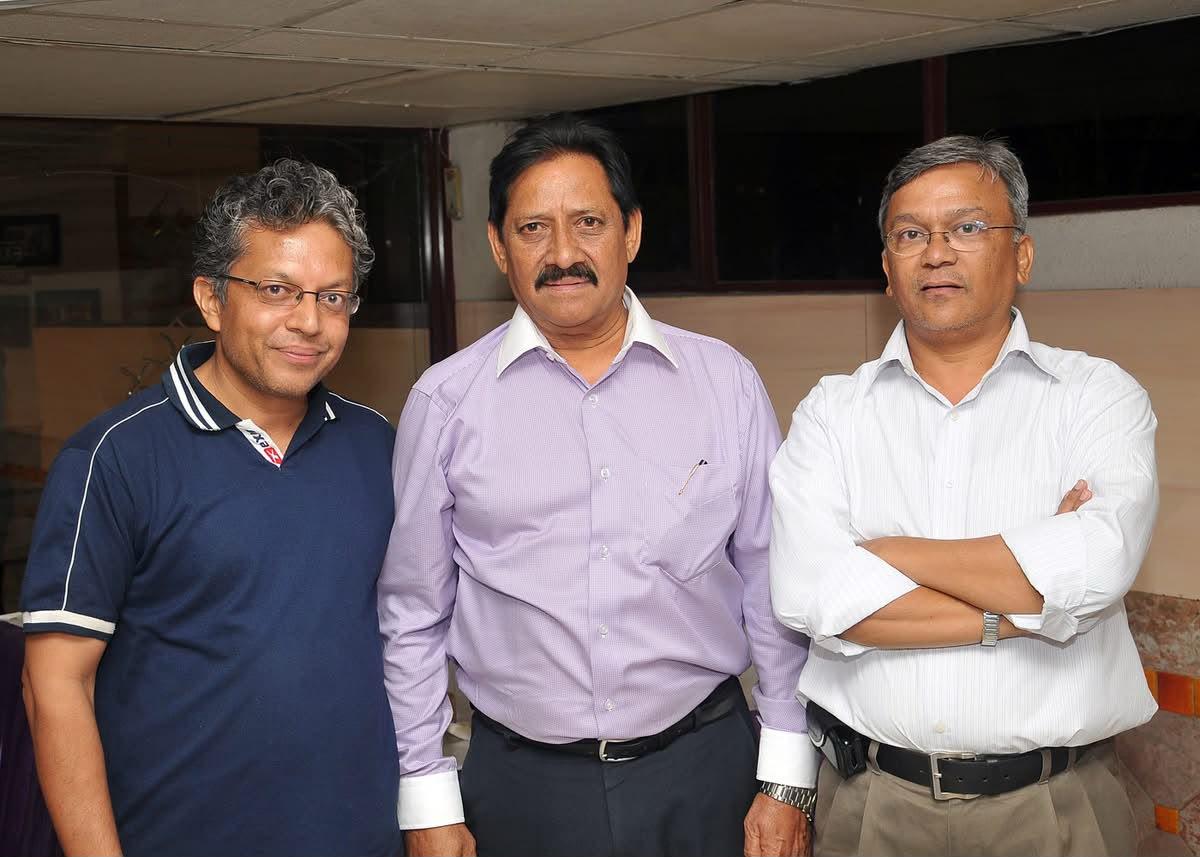
Chetan Chauhan was keen that we meet the young Virat Kohli, whose talent and temperament had already caught his attention. He invited my colleague Rakesh Rao and me to his birthday gathering in July 2008, where we got an opportunity to meet the youngster who had just led India to the U-19 World Cup title. | Photo Credit: Special arrangement
Chauhan had a special liking for Virat. “ Sher batsman (tiger batter)”, he would say. In July 2008, he invited me and my colleague Rakesh Rao to his birthday. “Please come. I have called Virat and Rajkumar,” he insisted. I had great respect for him, and we went. The invitation, I realised, was really his way of making sure we met the youngster who had won the U-19 World Cup that March.
Remembering where it all began
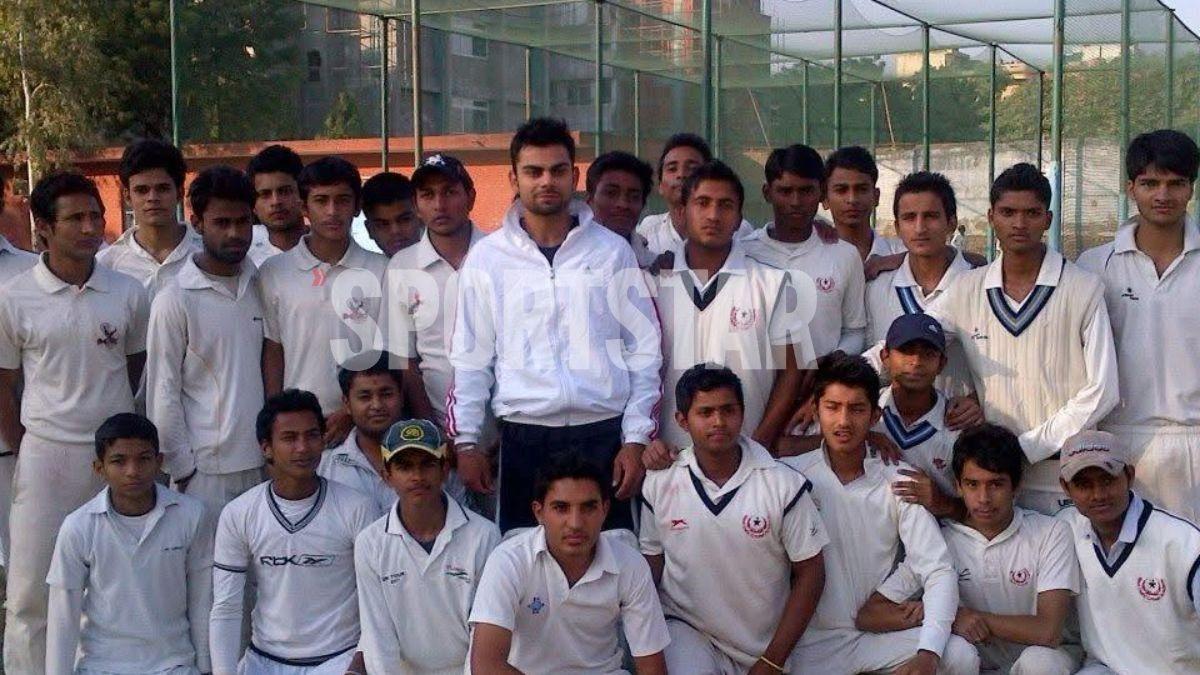
Even after reaching the pinnacle of world cricket, Virat Kohli continues to return to the place where it all began. The West Delhi Cricket Academy, where Rajkumar Sharma first spotted the spark in a young boy from Meera Bagh. | Photo Credit: Rajkumar Sharma
Even today, when he is in Delhi, Virat returns to the academy where his journey began, sometimes for a quiet net session under Rajkumar, away from the glare of international cricket. For the children there, his arrival is an occasion in itself. They go wild when they see him.
But when I think of him on his birthday, it is the smaller pictures that come back to me: a haircut that earned him a nickname, a damaged pair of Reebok shoes, a plate of parathas, an early-morning visit to the academy and a kit bag balanced on a bicycle.
Happy birthday, Chiku. I may never have called you that, but the name has become part of a wonderful journey I have been fortunate enough to witness.
Published on Nov 05, 2026
Latest on Sportstar
Virat Kohli at 38: From a straight drive that damaged Reeboks to a 228 after a tattoo challenge — let me take you on a journey that made Chiku... King KohliVijay Lokapally
WTA Chennai Open: Maaya Rajeshwaran makes last eight, first Indian woman in a Tour quarterfinal since Sania MirzaNihit Sachdeva