Three leading Test hopefuls are from the same state. A crucial Shield change might be why

Disgruntled rival Australian states used to joke that players selected for New South Wales were also given a baggy green cap to go with their new baggy blue.
Disgruntled rival Australian states used to joke that players selected for New South Wales were also given a baggy green cap to go with their new baggy blue.
It’s not a perception backed up by evidence – just four of Australia’s last 29 Test debutants, dating back to December 2014, have been from NSW.
But in the coming months, that saying might well come back into vogue.
With Australia’s much-maligned top order spluttering to the point of mandating change midway through their series against South Africa, there has never been a better time for wannabe Test hopefuls to start plundering runs in the Sheffield Shield.
And two rounds in, one state in particular has taken up that gauntlet.
Watch Australia’s Tour of South Africa Live & Exclusive on Fox Cricket, available on Kayo Sports | Get Kayo now.
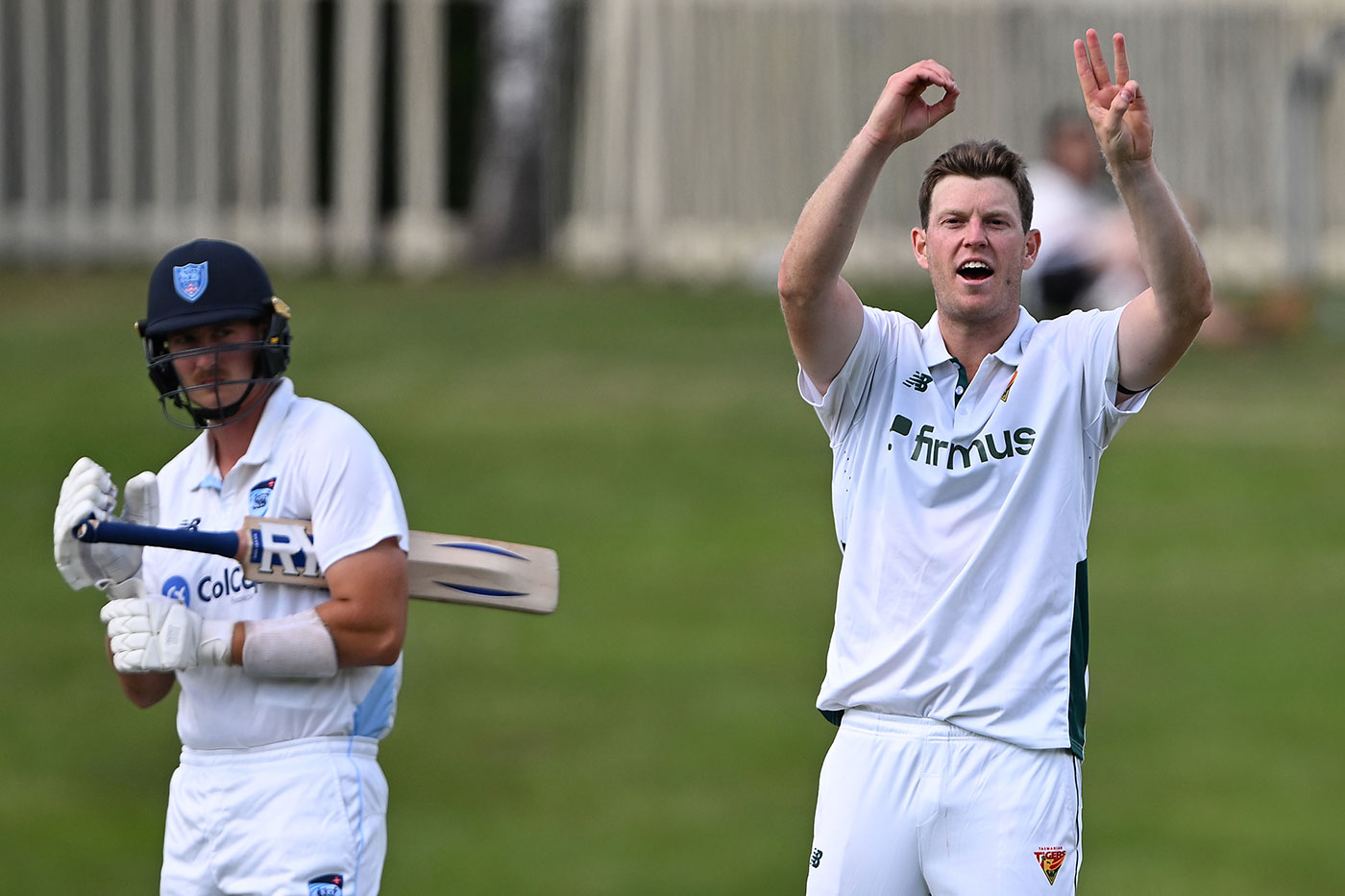
The Blues sit fourth on the Shield table as one of only two winless teams alongside Victoria, having drawn clashes with Tasmania (at home) and Western Australia (away).
But on an individual level, an eye-watering glut of runs has seen a group of contenders emerge as bona fide candidates should the likes of Marnus Labuschagne, Beau Webster and Blues Shield captain Nic Maddinson run out of chances for a four-Test home summer against New Zealand.
And most crucially of all, they’ve come in a manner that would delight Australian selectors: in the top order.
“I think it’s a great sign,” former NSW captain and Australian Test all-rounder Moises Henriques told foxsports.com.au of his former teammates’ strong start.
“It’s great to see batters across the country getting some big scores on the board, and showing what the batting depth across Australia is actually like.
“I feel like the last three or four years has probably not really truly represented how strong the batting depth is in Australia.”
“There’s some really promising signs there across the board.”
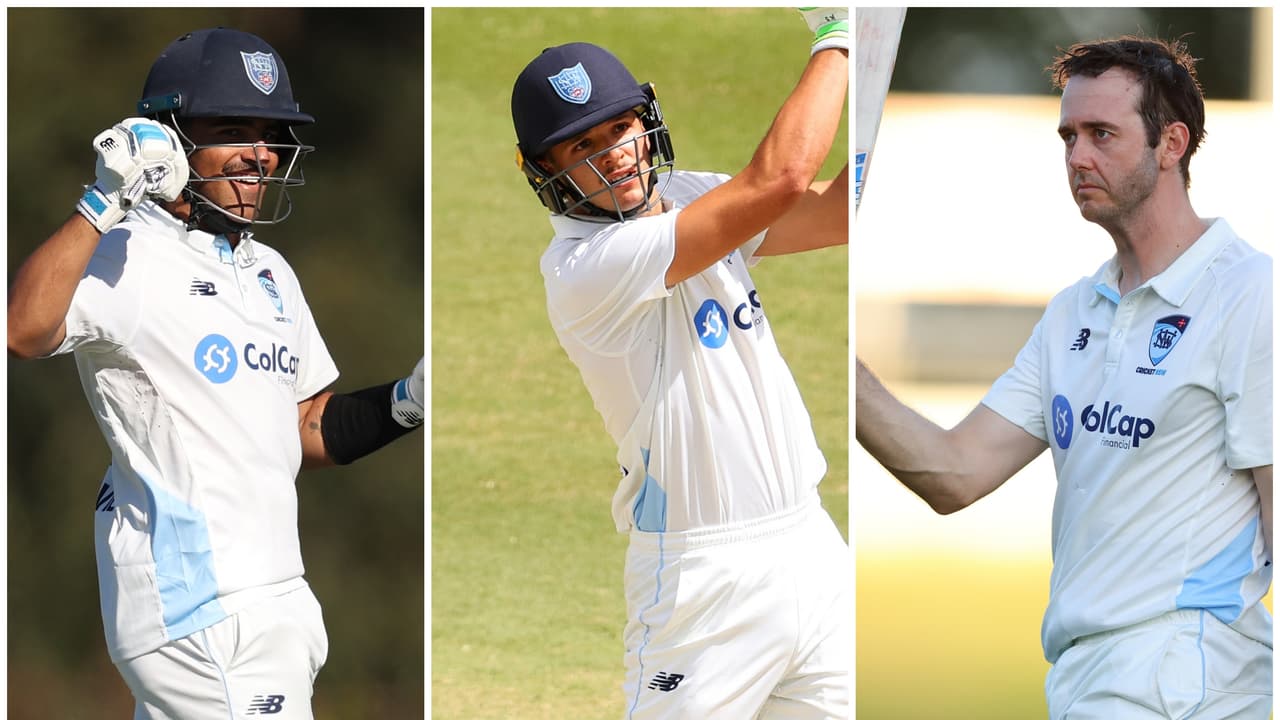
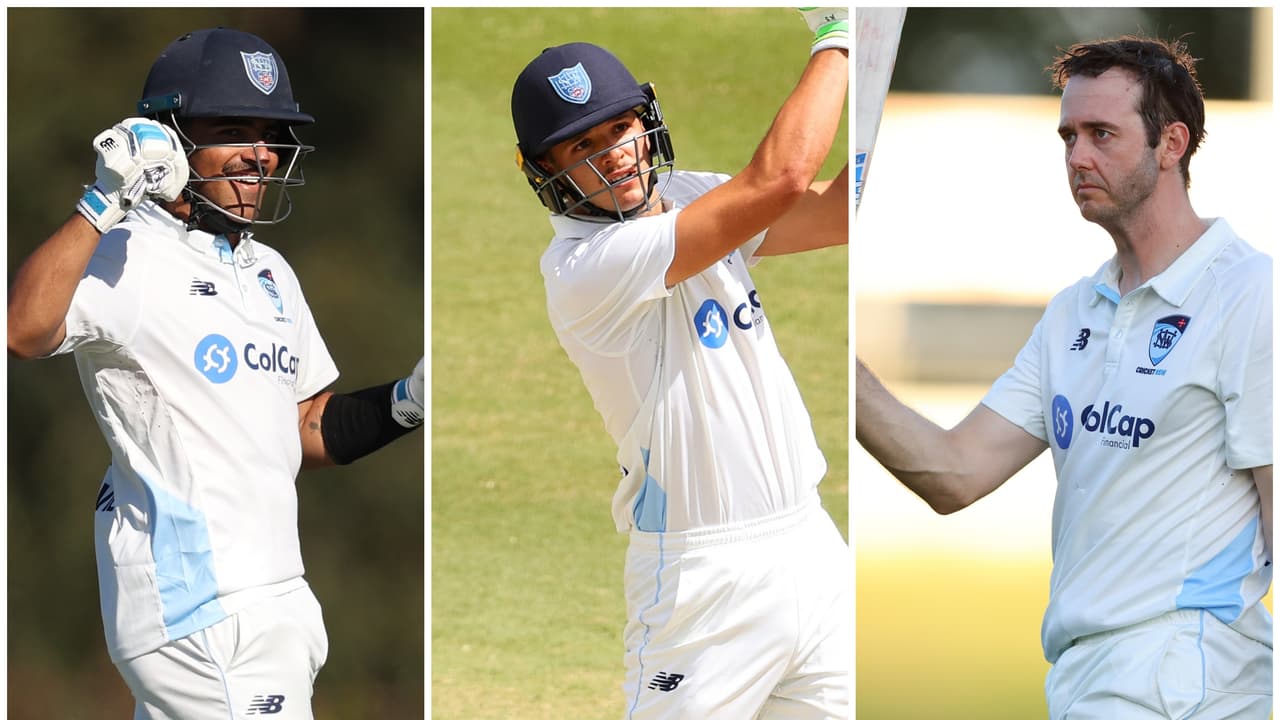
Three of the top five run-scorers for the season are the Blues top three.
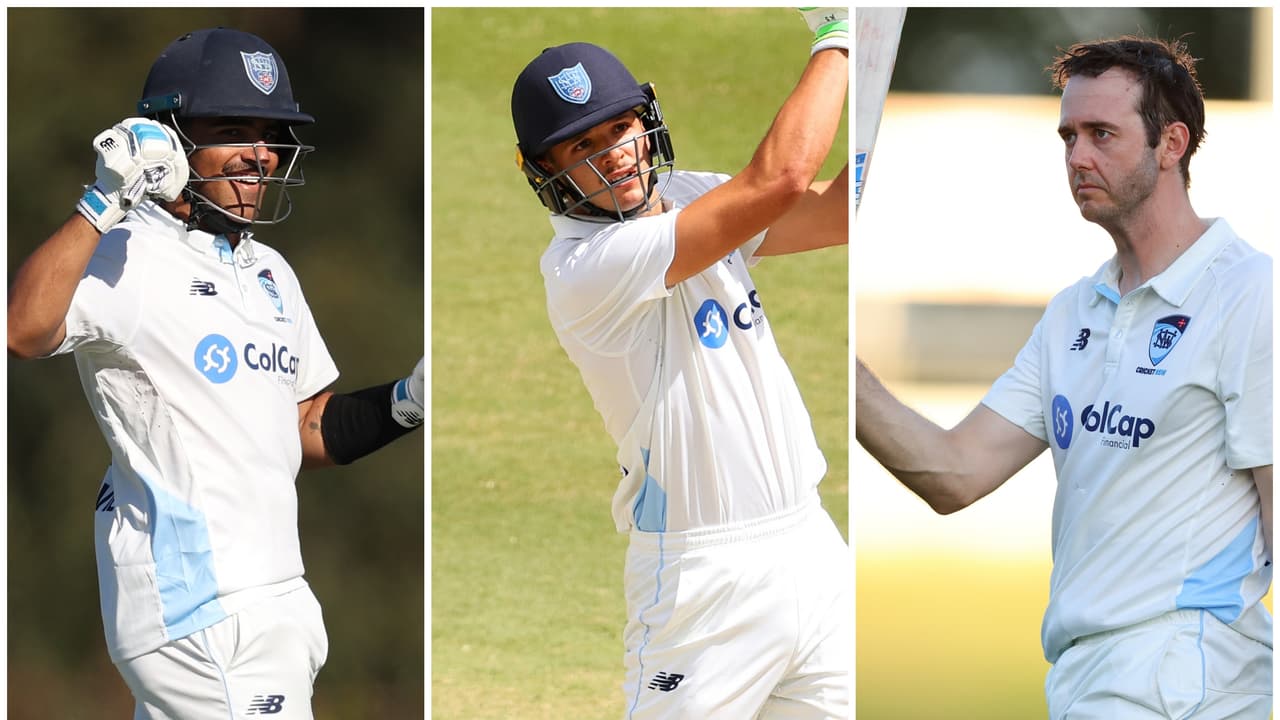
Ollie Davies tops the charts with 315 runs in three innings, having backed up an extraordinary 253 against Tasmania at more than run-a-ball pace with a half-century at the WACA.
It’s been an instant vindication of a move to open the batting inspired by coach Brad Haddin, less than a year after being dumped from the state team after a run of poor scores.
LATEST CRICKET NEWS
‘IT’S TIME’: Call for Australia to take bold selection ‘risk’
‘SHOUSE’: Star’s reality check after Aussie disaster
‘TWO BALLS LATER...’: Green’s painful reveal as major third Test call made
Extraordinarily, he is already more than halfway to Peter Handscomb’s Shield-leading 724-run campaign in 2025/26.
While in his infancy as a red-ball opener, Henriques likes what he sees – and can see similarities to one of Australia’s greatest ever at the top of the order.
“Davey Warner never opened the batting in his career until he started playing T20 cricket,” he said.
“I played junior cricket with Davey and he batted four, five and six. It wasn’t until T20 cricket was introduced that he started opening the batting and showing what he could do at the top of the order.
“He was probably in his early 20s before he moved up to open the batting in the longer form.
“We know Ollie’s a similar style in terms of liking to keep the scoreboard moving. His main focus is trying to score runs and trying to put the pressure back on the bowler.
“As long as Ollie’s thinking positively and thinking about how he’s going to score runs, who knows? He’s such a talented player.
“It’ll be a matter of consistency and being able to do it as often as someone like Davey did.”
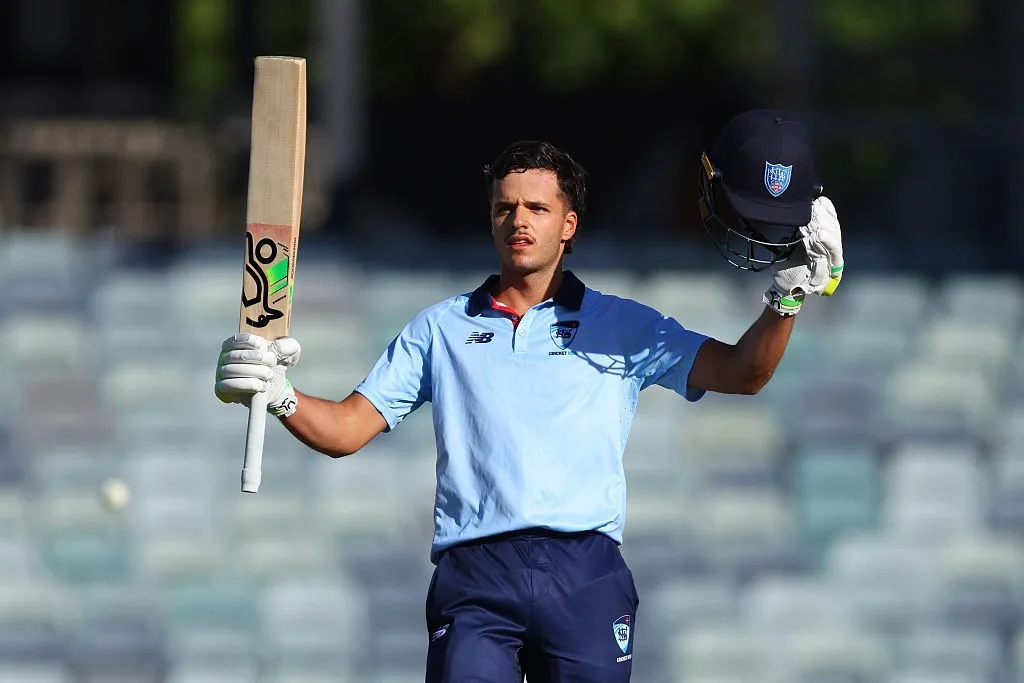
In third, from just one game, is fellow opener Sam Konstas, who also has a ‘daddy hundred’ to his name – an unbeaten 151 off just 167 balls in the second innings at the WACA to open the door for a victory push.
Added to a first innings 71, and a century in the One-Day Cup game at the same venue just days later, and the prodigy who burst onto the scene against India on Boxing Day 2024 is making a compelling case for a recall.
Fifth sits Kurtis Patterson, an older head at first drop for the Blues and one whose Test credentials have already been well established.
Back in early 2019, he scored an unbeaten century against Sri Lanka which gives him a current Test average of 144.
A minor injury concern scuppered his chances of being called into the Test squad as injury cover for Josh Inglis and Cameron Green in South Africa, an opportunity that opened the door for Maddinson’s shock return.
But with 50s in four of his six innings across formats thus far in 2026/27, including a measured half-century for the Cricket Australia XI against Bangladesh in August and 122 against the Warriors, he is a worthy contender for the Test No.3 spot as the pressure continues to grow on Labuschagne.
And Henriques couldn’t be more in favour of the 33-year old deserving another go at the highest level.
“I’m sure Kurtis had some answers as to why he wasn’t considered for these Test matches,” he told foxsports.com.au.
“And then to come out and score 100 in only his second or third hit after being left out, I think it shows how keen he is to throw another opportunity at Test cricket.
“You can never predict someone’s going to do well, but I don’t think anyone would deserve another crack more than he does in Australian cricket at the moment.”
With emerging all-rounder Jack Edwards sitting ninth and also with a ton to his name – in the same innings as Davies’ double century against Tasmania – it has been a long time since a single state had so many Test candidates in such a rich vein of form.
Making it possible are the early signs that Cricket Australia’s pleas have been heeded by the nation’s curators.
After last year’s bowler-dominated Shield season, as well as two Ashes Tests lasting just two days on juiced-up pitches in Perth and Melbourne, ground staff were urged to, if possible, produce batter-friendly wickets.
“What we’ve said is if you’re erring on which side of the line to roll on, then make it flatter, maybe slightly less grass, because the game has evolved over time,” CA chief executive Todd Greenberg said in Durban earlier this month.
In 31 matches last summer, there were 34 completed innings of fewer than 200 runs, with just nine scores in excess of 400.
Already this summer, there have been four 400+ scores, two in excess of 500 – two from the Blues, and one each from South Australia and Tasmania.
And just one of the six matches so far hasn’t made it to a fourth day.
“Especially in Australia, we’ve had so many results over the last three or four years in terms of wins and losses, which is great – but a lot of them are coming inside two and a half days, three days,” Henriques says of the change.
“I don’t think it’s a true representation of what you get at the next level in Test cricket.
“So it’s good to see that games are going longer, more runs are being scored, and the wickets are probably, I would suggest maybe looking a little similar to what Test wickets sort of look like at the level above that sort of domestic level.
It’s a shift towards batting that Henriques backs wholeheartedly, and thinks has been urgently needed for several years.
“There’s no doubt that they’re trying to promote batters spending time at the crease,” the former NSW captain said.
“And bowlers, after three or four years of conditions favouring medium pace bowling, maybe (facing) some conditions where it’s not quite as bowler-friendly and bowlers will have to maybe possibly work a little bit harder to get their rewards.
“That’s kind of how it works – there’s swings and roundabouts.”
For Henriques, the move towards more batter-friendly conditions at Shield level is an essential reminder that for all the hand-wringing about Australian cricket’s lack of batting depth, the answers are more complex than simply an absence of talent.
“Anyone who’s played first-class cricket or been involved in it from a coaching perspective over the last three or four years, there’s a lot of bowlers that are averaging 20 or less, and a lot of batters averaging a lot lower than they historically would,” he told foxsports.com.au.
“I think that says a lot about the conditions and how this season has started so far.”
However, Henriques is aware it won’t change much unless Shield conditions are replicated at Test level, where runs in recent summers have been difficult to come by for both Australia and visiting teams alike.
“Unless all the bowlers have gotten worse in three months and all the batters have gotten a lot better, you’d suggest it might be conditions-related as opposed to all of a sudden finding the secret answer to our batting woes and our bowlers have suddenly gotten worse,” he said.
“I think it’s a nice reminder of how much the conditions do play a part in bowling averages and batting averages.”
A shortened Test summer featuring the equal-lowest amount of matches (four) of any Australian home swing in the 21st century only adds to the opportunity for Konstas, Davies, Patterson and anyone else striving to make their case at Shield level.
It means every state will play four more matches before the first ball is bowled against the Black Caps at Optus Stadium on December 9.
That’s eight more opportunities to stake a claim in red-ball cricket.
And for Davies, a continued form surge would, Test debut or not, see him pass every run-scorer from the 2025/26 season before Christmas.