Opener or No.3 - Where should Vaibhav Suryavanshi bat for India in NZ vs IND 2026 3rd T20I?



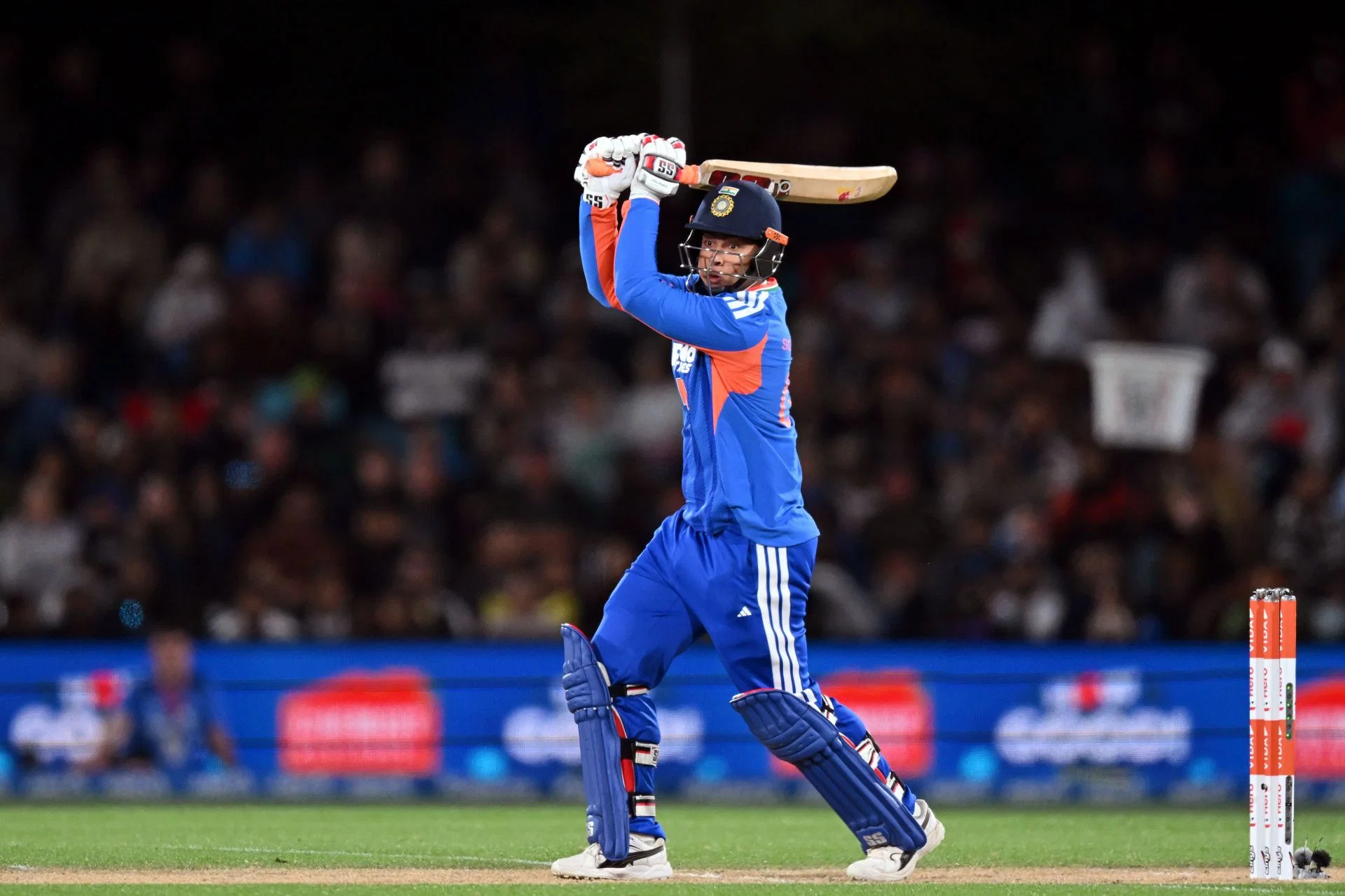
Indian teenage sensation Vaibhav Suryavanshi's game time has been a major talking point of late, especially as it extended from the home series against West Indies into the tour of New Zealand as well.
Indian teenage sensation Vaibhav Suryavanshi's game time has been a major talking point of late, especially as it extended from the home series against West Indies into the tour of New Zealand as well. After not being selected for the series opener against the Blackcaps, the youngster got a valuable opportunity in the playing XI after an injury to Ishan Kishan.
However, instead of slotting at the top of the order with Abhishek Sharma as usual, Vaibhav Suryavanshi was sent in at No.3 in the run chase. It was a rough welcome for the teenager in New Zealand and the new position as he perished for four runs off eight balls. His pure raw aggression was totally missing and was swapped for rarely seen tentativeness.
After witnessing how Vaibhav Suryavanshi fared at No.3, the Indian team management are left with making a huge call once again, with Ishan Kishan still unavailable due to injury. With the youngster's presence as an opener and at No.3 bringing its own share of merits and demerits over a wide range of aspects, the final call will convey a lot.
On that note, let us take a look at where Vaibhav Suryavanshi should feature in the batting order for India in NZ vs IND 2026 3rd T20I.
#1 Vaibhav Suryavanshi's familiarity vs. the need to retain the Abhishek-Samson pair
The main argument preventing Vaibhav Suryavanshi from walking into the playing XI as an opener when there is a vacancy in the batting order is the momentum and chemistry Abhishek Sharma and Sanju Samson share at the moment. India have made the costly mistake of separating the pair on multiple occasions in the past, and have paid the price.
Since the end of the Zimbabwe tour, India have wholeheartedly backed Abhishek Sharma and Sanju Samson as their go-to pair even when there was serious temptation to fully integrate Vaibhav Suryavanshi into the scheme of things. Furthermore, the right-hand-left-hand pair have hardly put a foot wrong over the last 10 innings they have opened together, averaging 53.20 and scoring runs at a very brisk rate, completely capitalising on the powerplay.
Slotting Vaibhav Suryavanshi at the top brings the age-old issue - the match-up against off-spinners. With New Zealand having a wily off-spinner like Michael Bracewell, who has already dismissed two left-handers, including Abhishek Sharma, in the series so far, India will be back to square one if they decide to go with the change.
So given the current circumstances and the hard work Abhishek Sharma and Sanju Samson have put in to once again be a reliable pair, their momentum takes precedence over Vaibhav Suryavanshi's familiarity with the opening role.
#2 Does batting flexibility also apply to Vaibhav Suryavanshi?
If we look at some modern-day India openers like Rohit Sharma, Shubman Gill, Abhishek Sharma, Sanju Samson, KL Rahul, Yashasvi Jaiswal, not one of them has exclusively played as an opening batter in their careers. Some evolved from being middle-order batters, while others have had to shuffle around to meet the team's demands. Shubman Gill, the reigning No.1 ODI batter, dropped down to No.3 during the home series against Afghanistan to accommodate Yashasvi Jaiswal at the top.
Furthermore, even the openers from the previous generation like Virender Sehwag, Sachin Tendulkar, Gautam Gambhir, Sourav Ganguly, and many more have never been guaranteed openers, and have had to adapt to different roles. From MS Dhoni's controversial openers' rotation policy to overcrowding of openers, someone or the other has always had to sacrifice their position at the top.
The point being that such minor shuffles are quite common and unavoidable to a degree. Skipper Shreyas Iyer already addressed it during the pre-series press conference, stating that:
"The conditions will demand it, the situation will demand it, and you will have to be happy with whatever number you get. It cannot be that one player can only play in one particular position."
It is understandable that for someone like Vaibhav Suryavanshi who might be growing a bit restless on the sidelines, he would prefer to bat at the top, but if other batters have had to compromise and sacrifice their preferred positions in the past, the teenager must also suffer a similar fate given that he is wearing the same jersey as the rest.
The player who Vaibhav Suryavanshi replaced in the playing XI, Ishan Kishan, is the best example of how he made the most of a similar situation. The southpaw opened with Abhishek Sharma in the first half of the T20 World Cup 2026, before being demoted to No.3. The abrupt switch has not affected his numbers or playing style at all.
Sure, he had the advantage of playing at No.3 at Sunrisers Hyderabad (SRH), but the core principle remains.
#3 Did conditions affect Vaibhav's innings or a new batting position?
In the second T20I, Vaibhav Suryavanshi walked in to bat in the fifth over, which is slightly different from what he is used to. But it is still an area of an innings where he usually operates. The only difference is that he has to start from a point where, in other cases, he has already settled down.
It is hard to believe that such a minor change can result in such a drastic change in Vaibhav Suryavanshi, when there are more pertinent factors in play. It makes much more sense to think from a perspective where the slow pitch, the testing conditions, the pressure of a climbing required rate, and some tight bowling contributed much more to his poor innings than just a minor change in his batting position.
Conclusion: Vaibhav Suryavanshi is definitely not India's long-term No.3 by any stretch of the imagination, but a modern-day cricketer, irrespective of his age, should be at least a little bit flexible, as situations might not always be ideal.
With the way the Abhishek Sharma-Sanju Samson partnership has been delivering and the priceless momentum that they have, disrupting them at this stage, even just for one match, sends the wrong message, especially to Sanju Samson, who has had to play the sacrificial lamb one too many times in his career.
The fact that Vaibhav Suryavanshi is getting game time in New Zealand at his age is a huge bonus, and under much better circumstances and conditions, he should not find No.3 too difficult. It is also an opportunity for him to make a statement that he can adapt and overcome, rather than being cooped up as a one-dimensional opener.
As a result, there is no reason for India to change their combination or batting order just because Vaibhav Suryavanshi struggled in one outing at No.3, and the fact that Ishan Kishan might return for the next game anyway. Switching things after just one match because of a little outside noise will only do more harm than good in the long run.
Looking for fast live cricket scores? Download CricRocket and get fast score updates, top-notch commentary in-depth match stats & much more! 🚀☄️